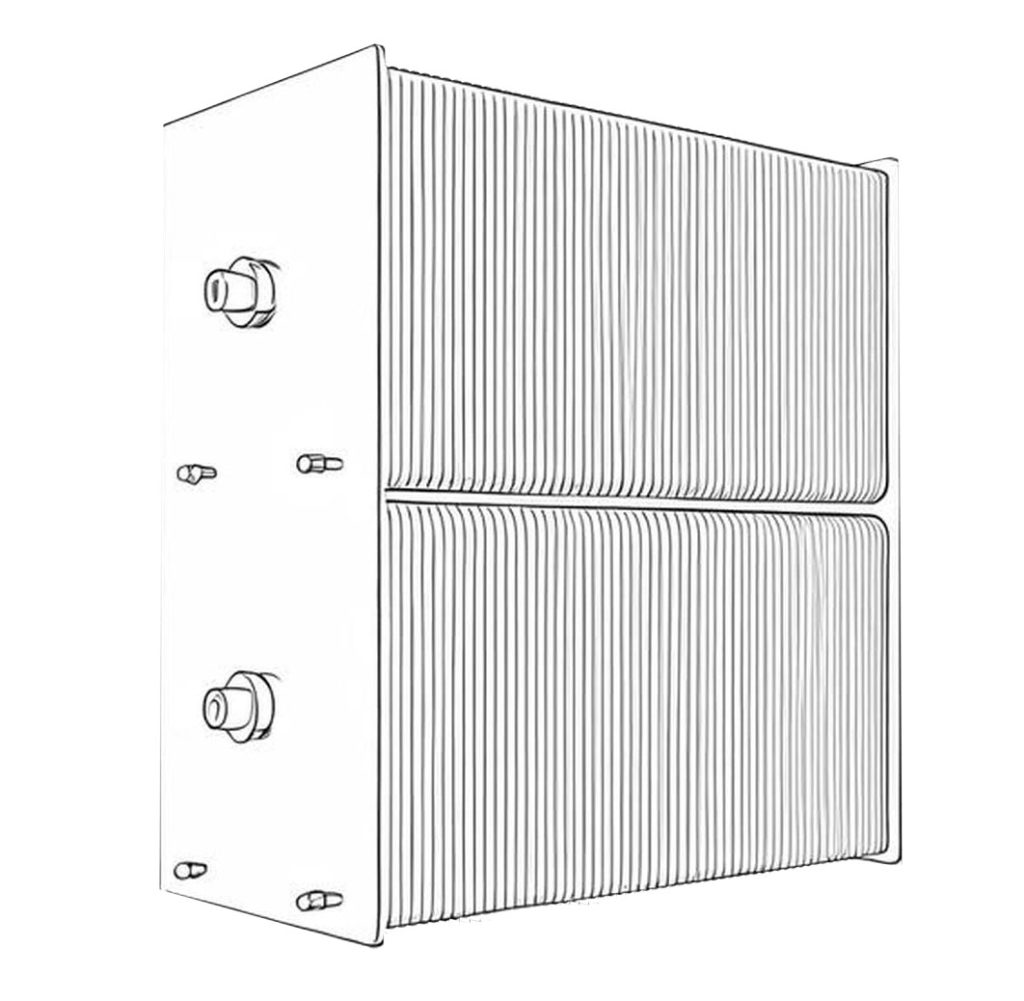
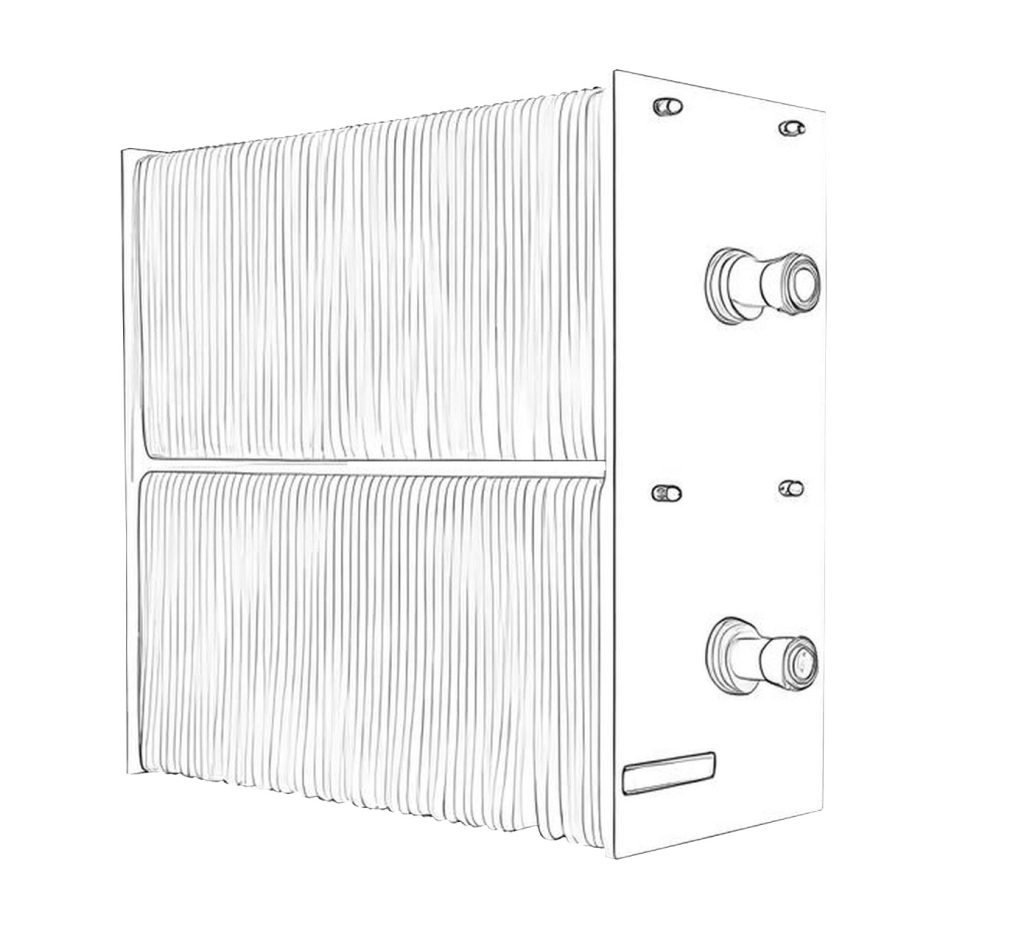
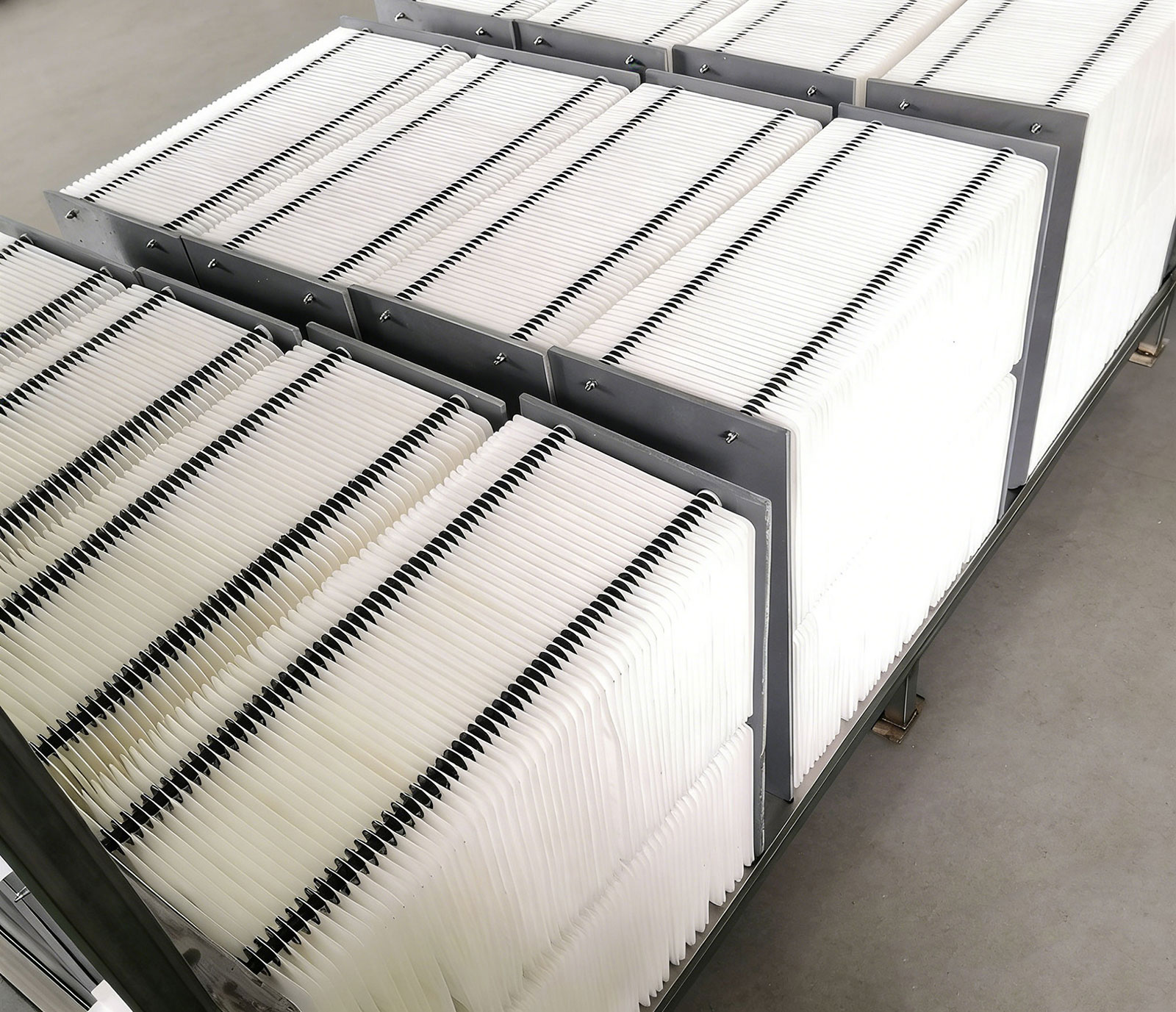
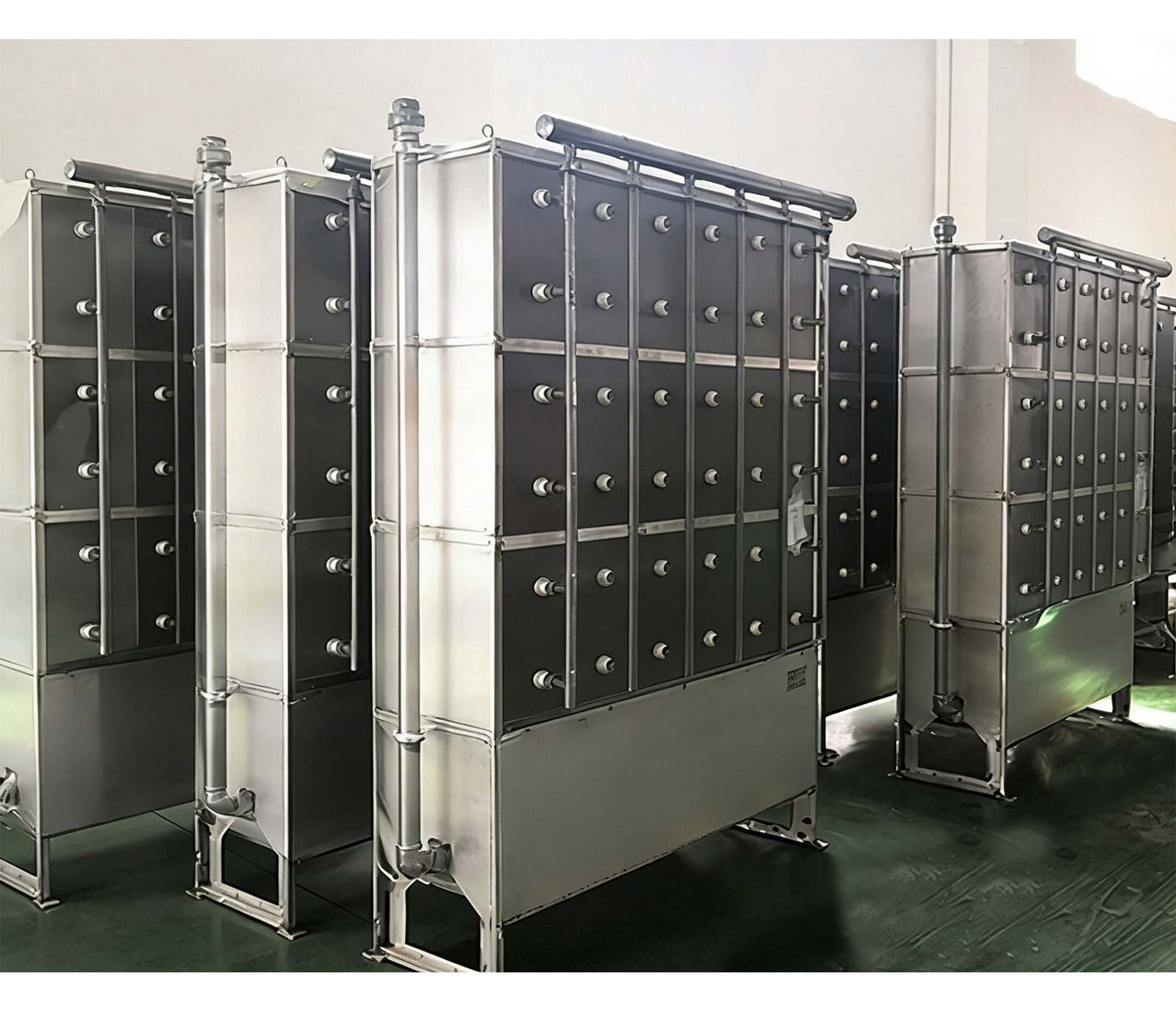
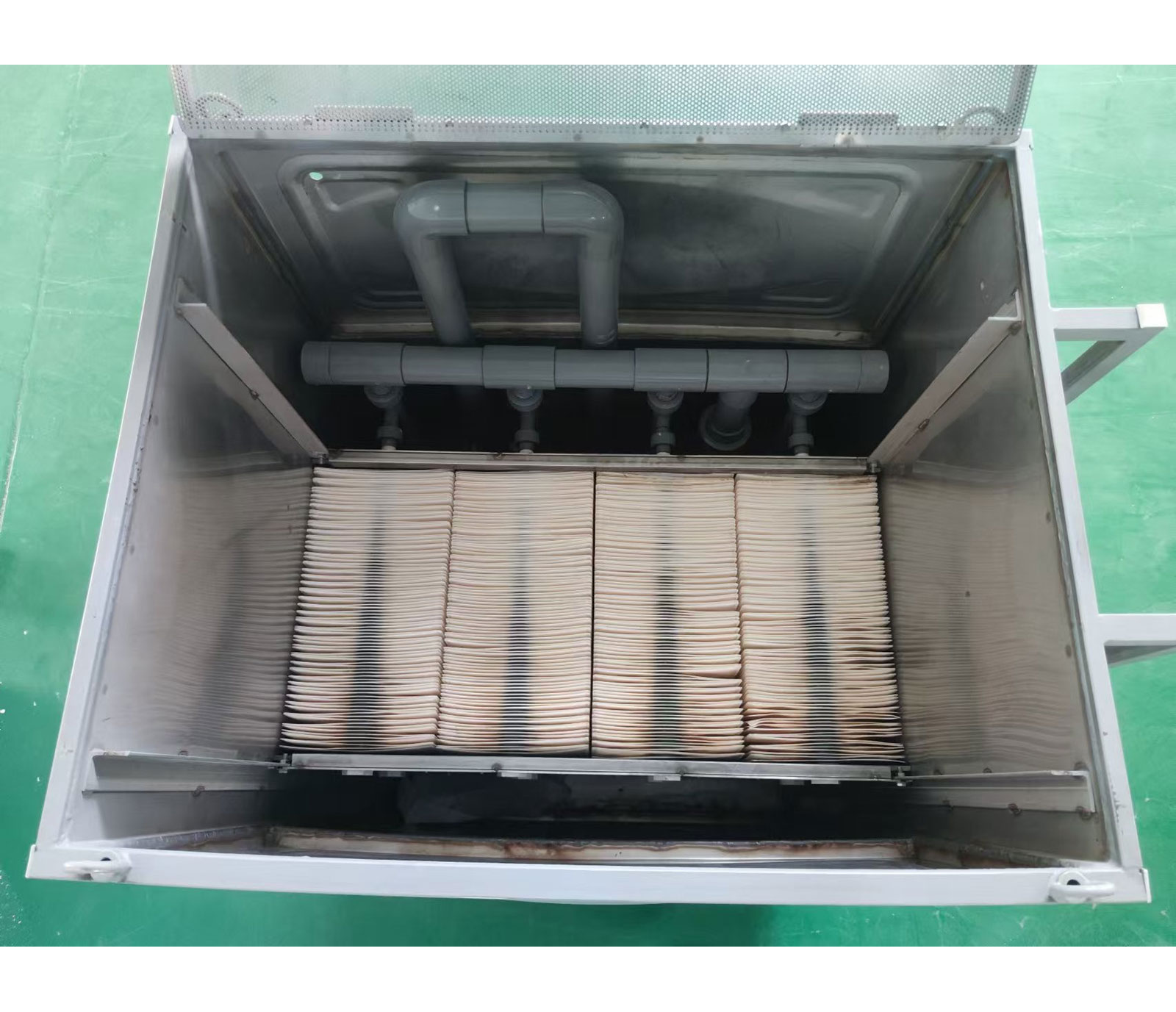
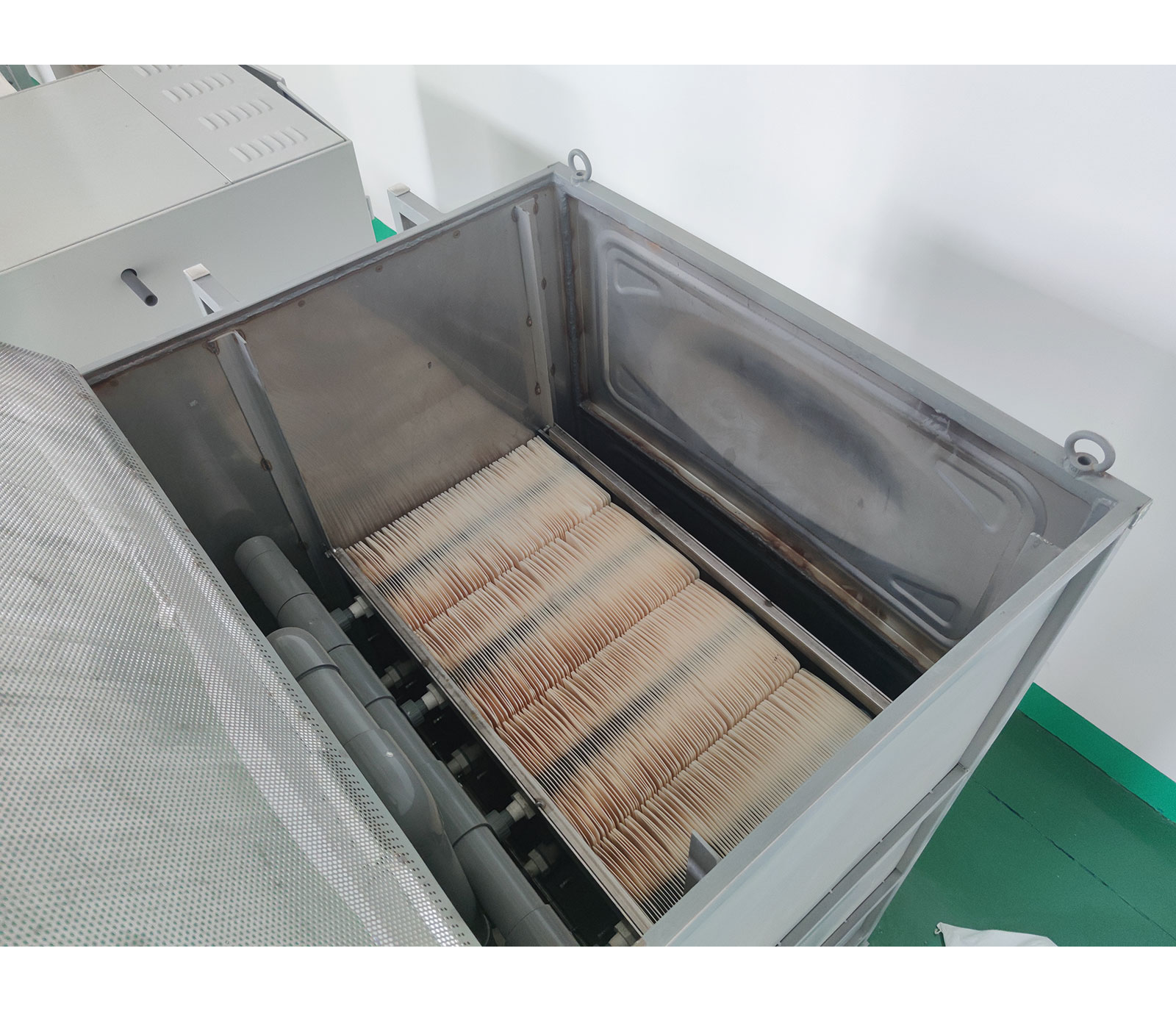
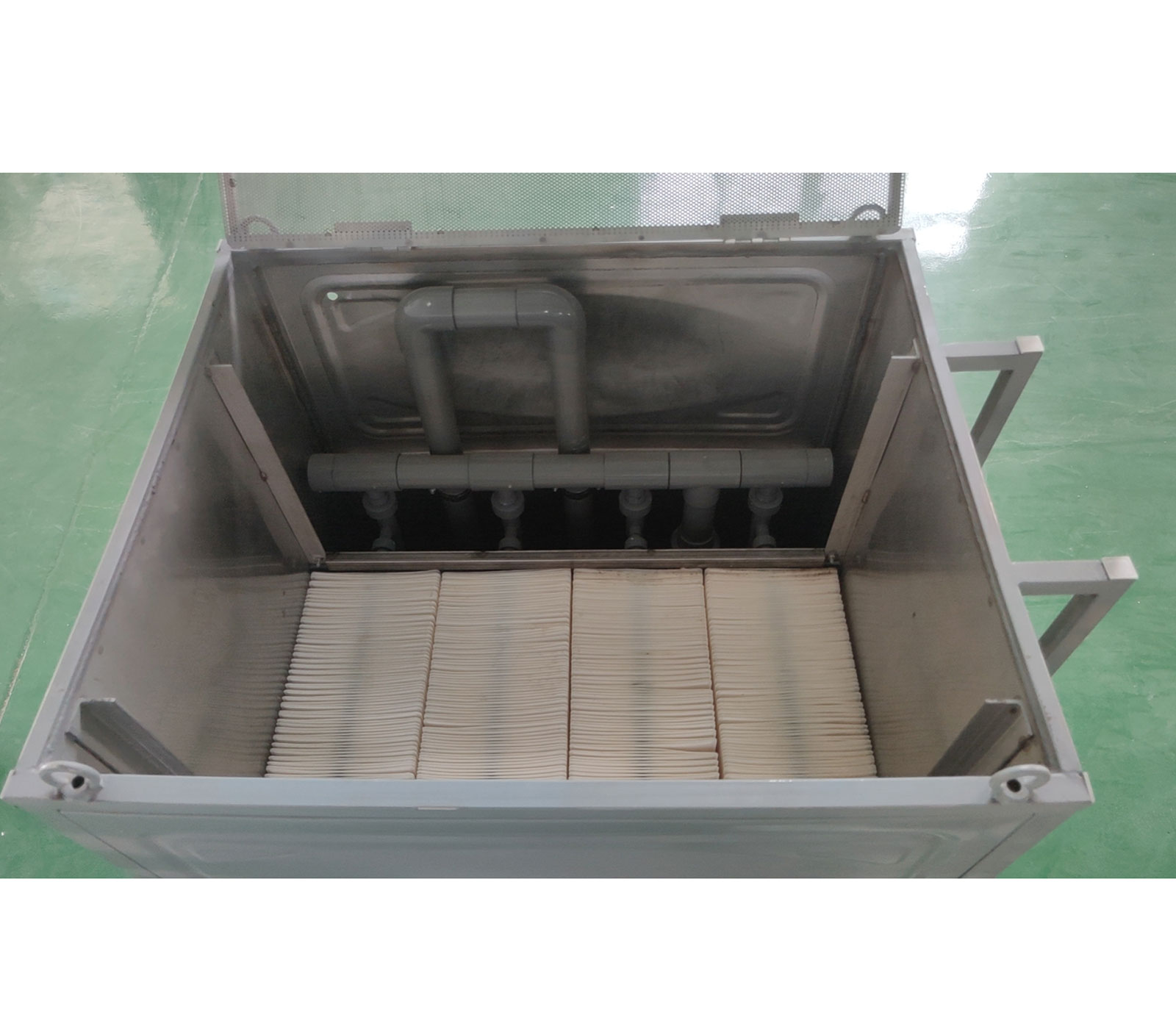
Functional Logic: The system operates by directly submerging the membrane module in the biologicalaeration tank. The sludge is reliably retained by the membrane, while clean water permeates through themembrane pores under negative pressure, entering the diversion channel and collecting into the manifoldfor discharge. Simultaneously, bubbles generated by bottom aeration and the resulting upward water flowcontinuously scour the membrane surface, providing a physical cleaning effect that significantly delaysmembrane fouling.
Applications: 1.Challenging Industrial Wastewater: Ideal for treating complex effluents including landfill leachate,electroplating/chemical wastewater, medical wastewater, and industrial wastewater with high salinity orhigh COD levels. 2.Municipal & Decentralized Systems: Perfectly suited for the upgrading and retrofitting of municipalwastewater treatment plants, as well as rural decentralized wastewater treatment stations.3.Demanding Project Conditions: Highly effective for projects characterized by highly variable influentwater quality, high sludge concentrations, and limited O8M (Operation and Maintenance) capabilities.
Operation & Maintenance Guidelines: 1.Parameter Optimization: Strictly regulate the aeration rate and suction pressure (typically between -0.02 and -0.04 MPa). Avoid excessive suction pressure (Transmembrane Pressure /TMP), which can rapidly accelerate membrane fouling. 2.Scheduled Cleaning Protocols: Perform regular online chemical cleaning, globally known as Clean-in-Place (CIP). In cases of severe fouling, conduct offline chemical soaking (recovery cleaning) to restoremembrane performance. 3.Pre-treatment & Protection: Strictly prevent oils, greases (FOG), and sharp particulates from entering themembrane tank. This is critical to prevent physical damage to the membrane surface and avoid irreversible fouling.


 豫公网安备41077102000244号