

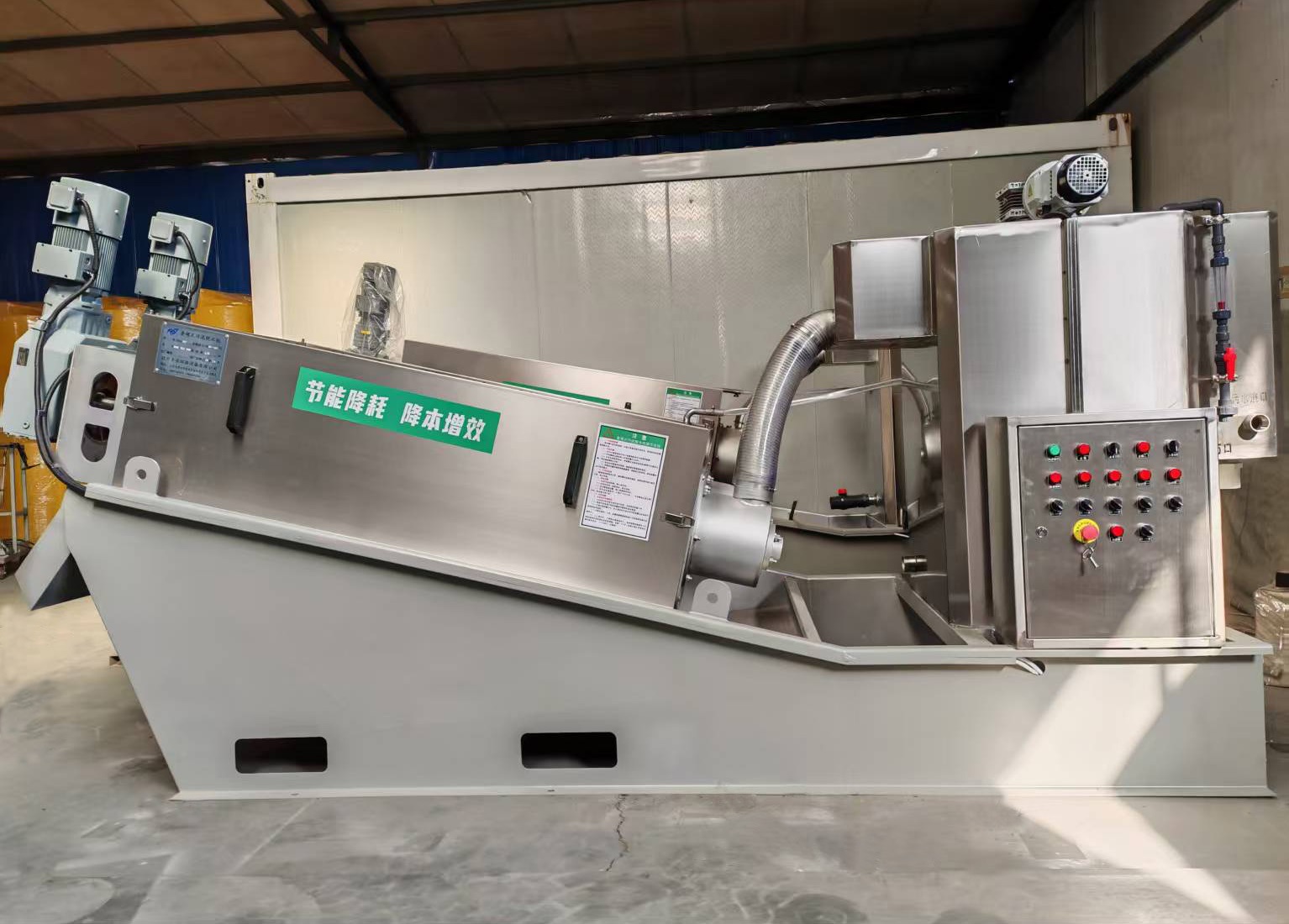
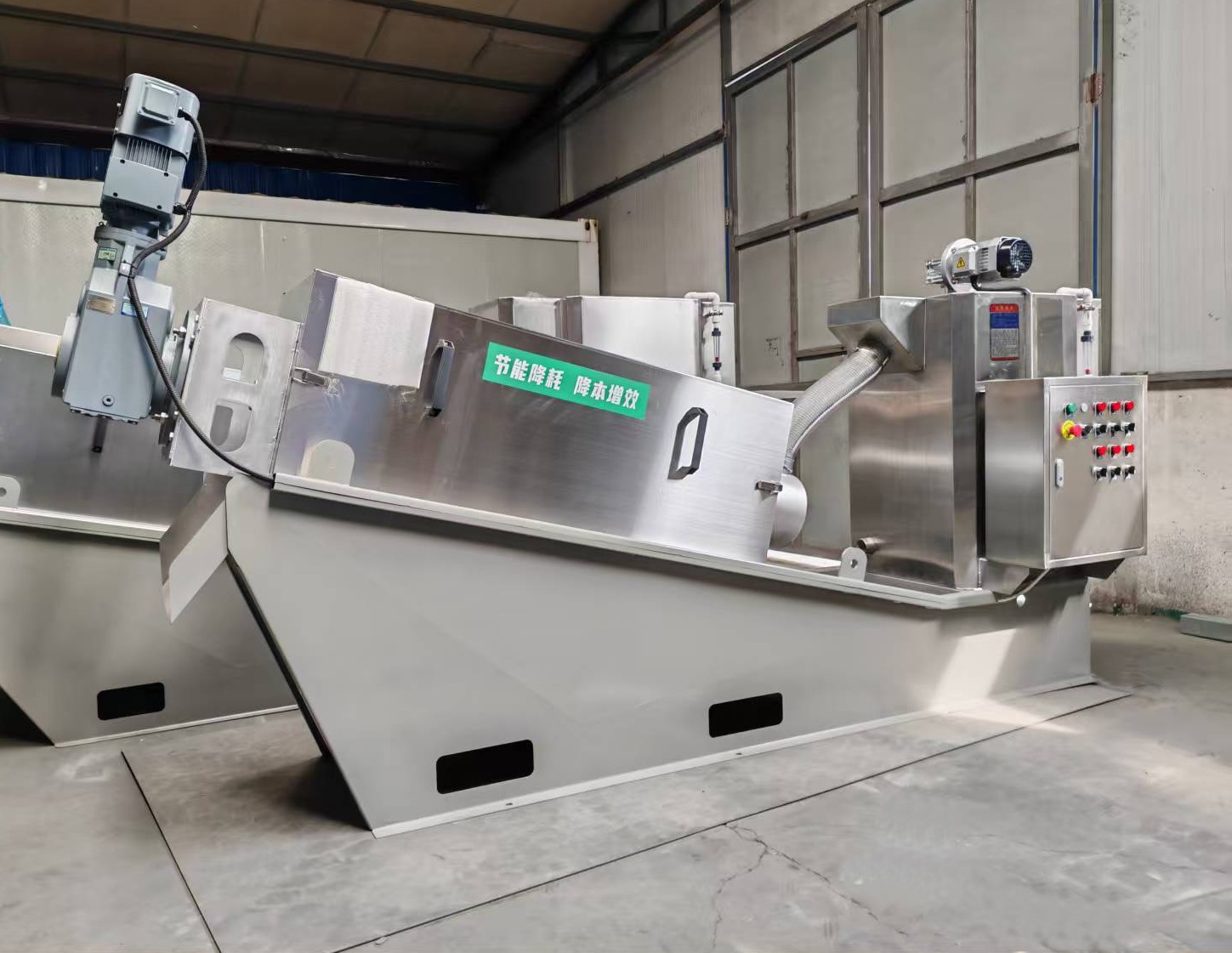

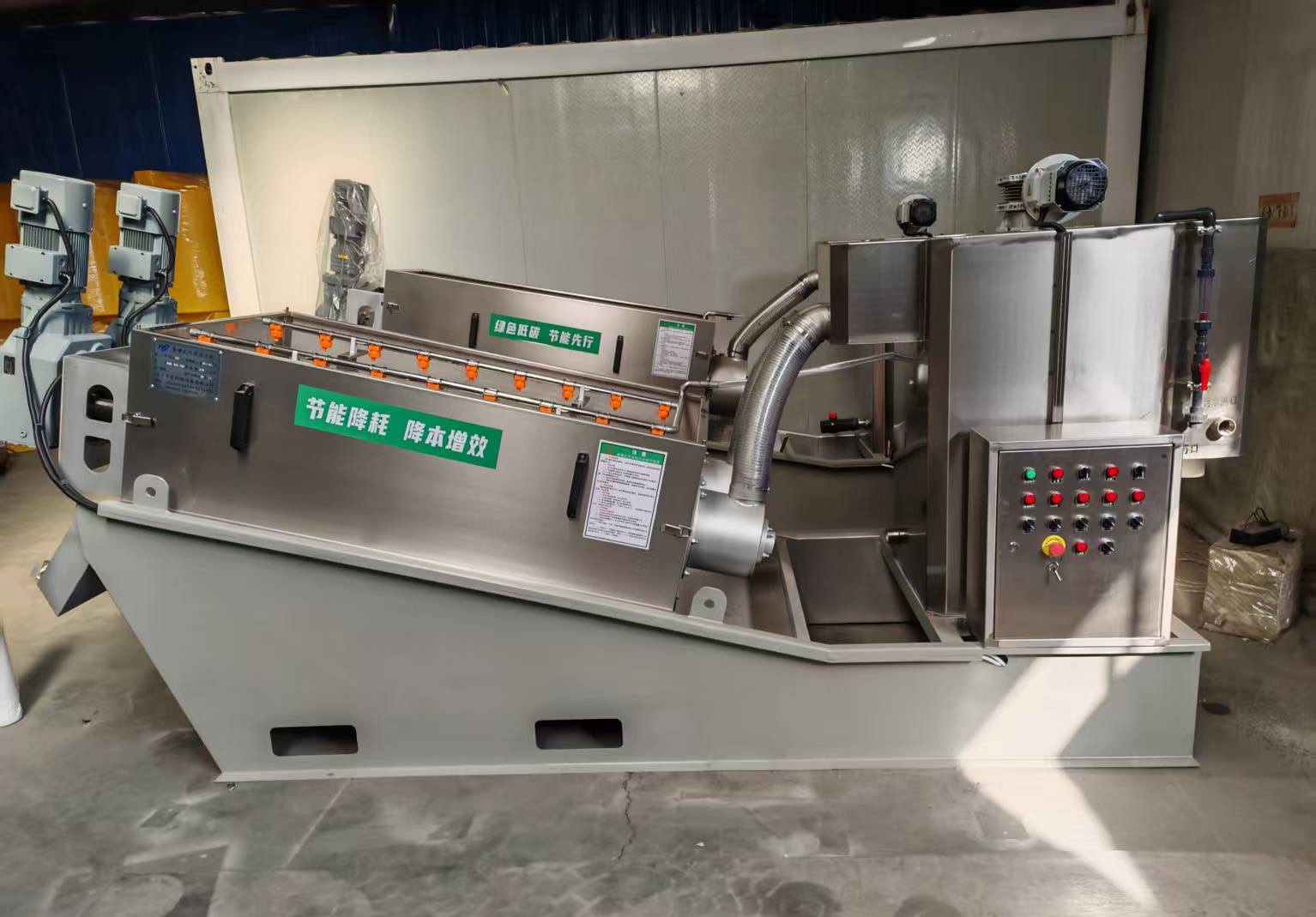
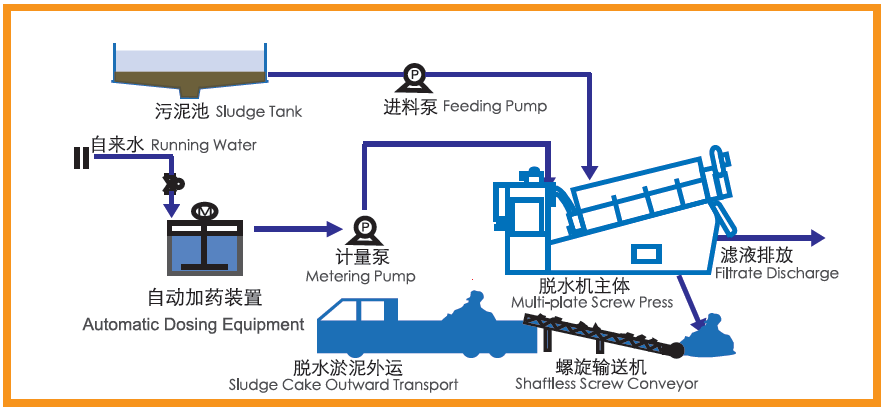
Structure & Working Principle:
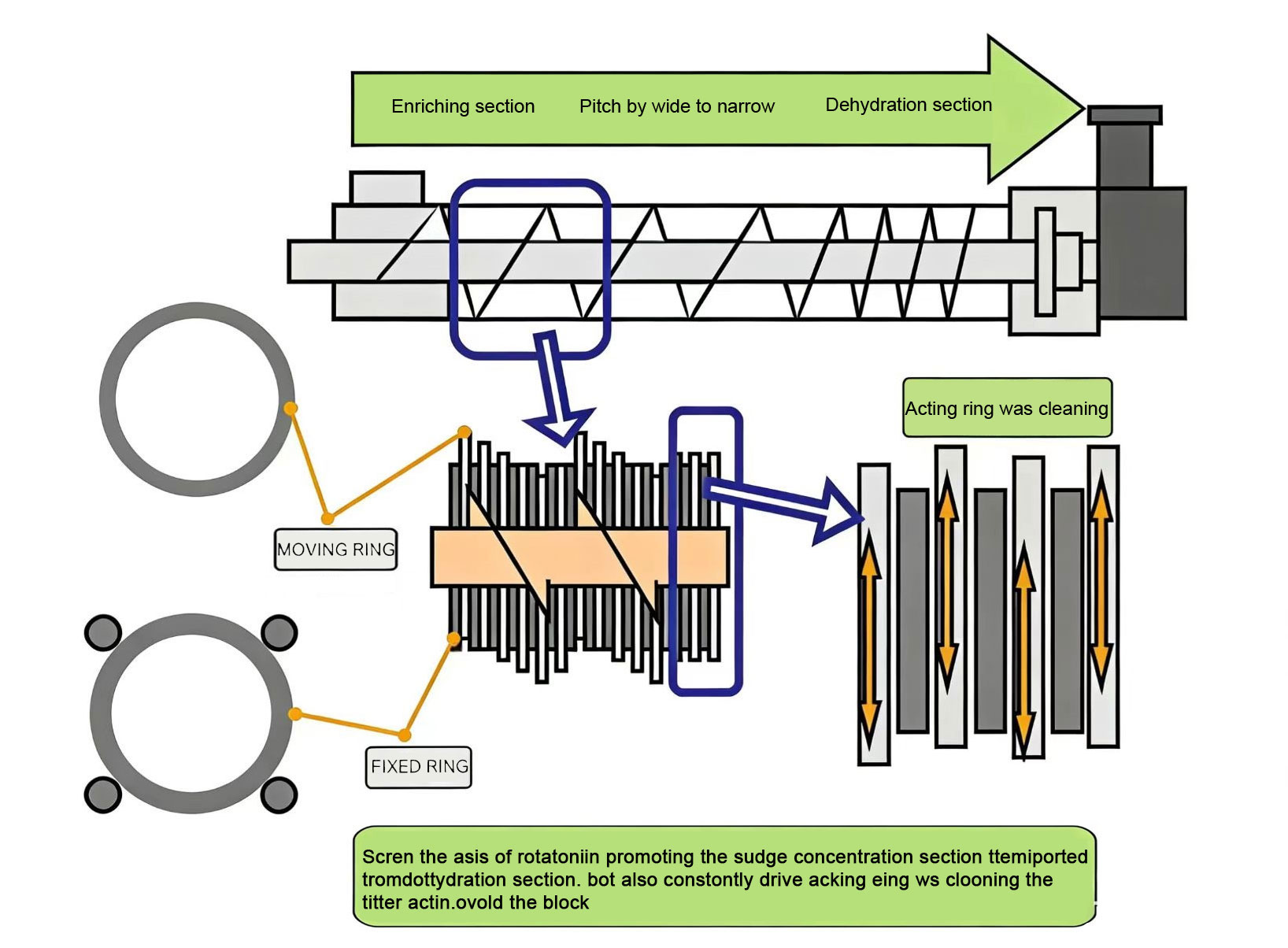
Key Advantages:
1.Compact & 24/7 Unmanned Operation: Space-saving and highly durable design. It is easy to operate and supports continuous 24/7 fully automated running without manual intervention.
2.Self-Cleaning & Ideal for Oily Sludge: The built-in self-cleaning mechanism prevents clogging, drastically reducing wash water consumption and internal circulation loads. It is exceptionally effective for dewatering oily sludge.
3.Wide Industry Application: Highly versatile for petroleum, chemicals, municipal wastewater, Food & Beverage (F&B), leather, pulp & paper, biopharmaceuticals, textile dyeing, and livestock farming.
4.Low OPEX & High Efficiency: Significantly reduces operating costs with ultra-low power consumption. It features an extended screw shaft and an enlarged filtration area for maximum output.
5.Safe & Quiet Operation: Low failure rate, minimal noise, and low vibration guarantee a safe and stable working environment.
6.Easy Maintenance: User-friendly design requires minimal and straightforward daily maintenance.
7.CAPEX Savings: Reduces overall civil engineering and project investment costs (e.g., by eliminating the need for sludge thickening tanks).
8.Enhanced Phosphorus Removal: Helps optimize the overall wastewater treatment process to improve phosphorus removal efficiency.
FAQ
Q1: What are the advantages of a multi-disk screw press over belt and filter presses?
Unlike belt or plate-and-frame filter presses, a multi-disk screw press enables 24/7 fully automated, unattended operation with a compact footprint. Its self-cleaning design prevents clogging, easily dewaters low-concentration oily sludge, and operates with minimal noise and power consumption.
Q2: Why is dewatered sludge moisture high or cake formation poor?
High cake moisture is typically caused by poor polymer flocculation, unstable feed concentration, insufficient screw pressure, or loose back-pressure plate settings. Quick fix: Optimize polymer (PAM) dosage, adjust sludge feed rate, and tighten the back-pressure plate to increase dewatering compression.
Q3: How to fix equipment clogging or severe sludge leakage?
Clogging and sludge leakage through rings stem from poor floc formation, excessive sludge feed, or misaligned ring gaps. Quick fix: Perform a spray wash cycle, readjust flocculant dosing to form stronger flocs, reduce feed volume, and inspect ring alignment.

 Henan Public Network Security Registration No. 41077102000244