


Food & Beverage Wastewater Treatment Solutions
Food and beverage manufacturing processes—including raw material washing, cooking, fermentation, equipment CIP cleaning, and workshop washdown—can generate wastewater with a high organic load. These streams commonly contain fats, oils, grease, proteins, starch, suspended solids, and nitrogen- and phosphorus-containing pollutants. Without appropriate treatment, food wastewater may contribute to odor issues, pipe blockage, process instability, and fluctuations in effluent parameters such as COD and ammonia nitrogen.
Minghua configures food and beverage wastewater treatment systems tailored to project-specific operating conditions, based on food product category, wastewater characteristics, treatment capacity, site conditions, and discharge requirements.
Core Challenges in Food and Beverage Wastewater
High Organic Loads and Oil & Grease
Wastewater from meat processing, seafood, dairy, bakery, condiment, and beverage production often contains elevated COD, BOD, fats, oils, grease, proteins, and starch-based organics. High-strength wastewater can increase the load on downstream biological treatment systems and may contribute to sludge bulking, pipe blockage, and odor-related operating issues.
Nitrogen, Phosphorus, and Nutrient Control
Wastewater from certain meat, seafood, and dairy processing operations may contain elevated ammonia nitrogen, total nitrogen, and total phosphorus. Where nitrogen and phosphorus control is required for discharge or municipal sewer acceptance, suitable biological nutrient-removal and polishing processes should be configured according to actual wastewater conditions.
Seasonal and Order-Driven Shock Loads
Wastewater flow and pollutant concentrations can fluctuate with peak and low production seasons, shift schedules, order volumes, and cleaning cycles. Where equalization capacity or biological shock-load tolerance is insufficient, these variations may affect treatment stability and effluent quality.
Limited Site Space and Operating Pressure
Many food manufacturers have limited space available for wastewater treatment and may not have dedicated environmental operations personnel. Treatment systems often need to balance treatment performance, footprint, automation level, civil-work requirements, and long-term operating costs.
Why Choose Minghua
Minghua provides more than standalone wastewater treatment equipment. We configure food and beverage wastewater treatment and resource-recovery systems around actual wastewater characteristics, treatment capacity, site conditions, discharge destination, water-reuse objectives, and operating-cost considerations.
- Compliance-Oriented Design:Based on applicable local discharge standards, industrial-park sewer acceptance requirements, and project-specific treatment targets, we configure pretreatment, biological treatment, polishing, and sludge-handling units to support stable operation and reduce compliance risk.
- Odor Control and Improved Site Conditions:For wastewater with high levels of oil, protein, and biodegradable organic matter, appropriate physical pretreatment, enclosed collection, flow equalization, and biological treatment design can help reduce odor-generation risks and improve conditions around the wastewater treatment area.
- Compact Systems and Cost Control:For projects with limited space or expansion requirements, modular, skid-mounted, or integrated treatment systems can reduce on-site civil works. Automation levels can be configured according to project scale and operating requirements.
- Water Reuse and Water-Use Optimization:Where treated-water quality meets the relevant requirements, Ultrafiltration (UF), Reverse Osmosis (RO), and other advanced treatment processes can be used to prepare water for suitable reuse applications, including workshop cleaning, cooling-water makeup, and other non-product-contact uses. This can help reduce fresh-water consumption and wastewater discharge volumes.
Tailored Food Wastewater Treatment Pathways
Minghua configures treatment pathways according to project scale, food category, wastewater characteristics, site constraints, and discharge requirements.
Conventional Food Manufacturing Facilities
For larger food wastewater projects with higher oil and organic loads, a combined treatment process may include: Screening / Oil Separation → Dissolved Air Flotation (DAF) → Biological Treatment → Clarification / Filtration or Further Polishing
Screening, oil separation, and DAF can be used to remove larger particles, free oil, grease, suspended solids, and selected organic pollutants before biological treatment. Downstream biological treatment units can then be configured according to wastewater characteristics, nutrient loads, and discharge targets to further reduce COD, ammonia nitrogen, and other pollutants.
Small and Medium-Sized Food Facilities
For lower treatment capacities, limited site space, or projects requiring shorter construction periods, an integrated MBR wastewater treatment system may be appropriate.
These systems integrate biological treatment and membrane separation within a compact equipment layout. MBR membrane separation can replace conventional secondary clarification, provide efficient solid-liquid separation, and reduce site footprint. Depending on treated-water quality and reuse requirements, effluent can be further polished or directed to suitable reuse applications.
Core Equipment
- Integrated MBR Wastewater Treatment System: Suitable for smaller wastewater flows, limited sites, and projects requiring a compact automated configuration
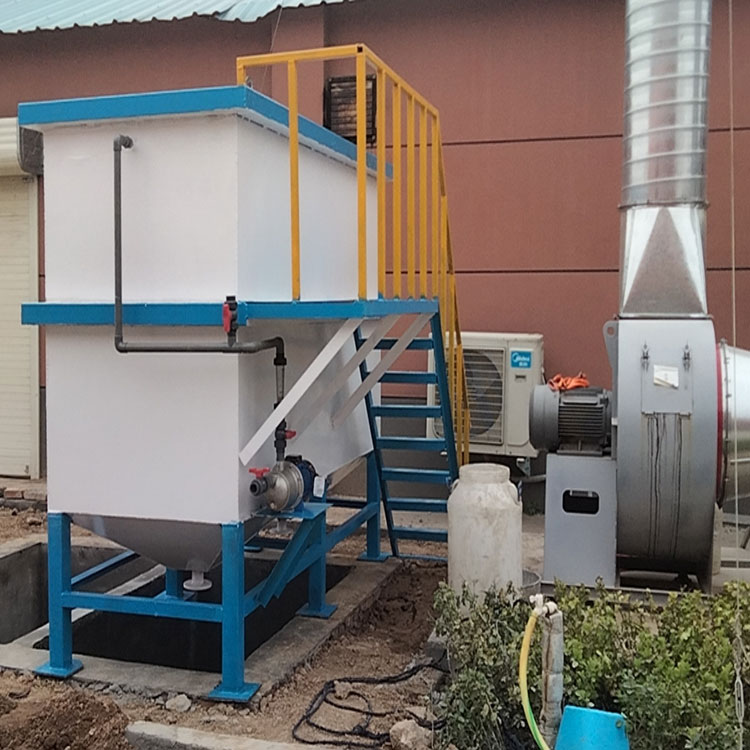
- Dissolved Air Flotation (DAF) System: Used to remove oil, floatables, suspended solids, and selected organic pollutants
- Automated Chemical Dosing System: Supports stable dosing for coagulation, flocculation, pH adjustment, and other treatment chemicals
- Volute Sludge Dewatering Press / Plate and Frame Filter Press: Used for sludge dewatering, volume reduction, and downstream handling
- Ultrafiltration (UF)& Reverse Osmosis (RO) Systems: Used for advanced purification, desalting, and reclaimed-water preparation where suitable
More Cases



 Henan Public Network Security Registration No. 41077102000244