
Textile Dyeing & Finishing Wastewater Treatment Solutions
Textile pre-treatment, dyeing, printing, and finishing processes can generate wastewater with high color, high COD, high alkalinity, high salinity, relatively low biodegradability, and significant fluctuations in wastewater quality. These streams may contain residual dyes, textile auxiliaries, suspended solids, salts, and refractory organic pollutants.
Frequent color changes, chemical changes, and cleaning cycles can further affect wastewater flow, pH, COD, color, and salinity. Without appropriate treatment, these variations may affect decolorization performance, biological treatment stability, discharge compliance, and water reuse objectives.
Minghua configures textile wastewater treatment and water reuse systems based on production processes, wastewater characteristics, discharge requirements, and reuse objectives.
Core Challenges in Textile Wastewater Treatment
High Color and Refractory COD
Dyes, textile auxiliaries, and residual organic compounds can create complex wastewater compositions. Conventional biological treatment alone may not meet demanding requirements for color removal and COD control.
High Alkalinity and Salinity Affect Biological Stability
Elevated pH, temperature, and salt concentrations may inhibit microbial activity. Equalization, stream segregation, and biological treatment processes should therefore be configured according to actual wastewater conditions.
Production Fluctuations Create Shock Loads
Frequent color changes, auxiliary chemical changes, and cleaning cycles can cause fluctuations in flow, COD, color, and pH, making stable system operation more challenging.
Discharge and Reuse Requirements Must Be Balanced
Textile manufacturers must balance local discharge requirements, freshwater costs, water reuse targets, and sludge disposal pressures.
Why Choose Minghua
Minghua provides integrated configurations covering pre-treatment, biological treatment, deep decolorization, and membrane-based water reuse—not just standalone equipment.
- Compliance-oriented configuration:Pre-treatment, biological treatment, polishing treatment, membrane systems, and sludge handling units can be combined according to local discharge standards, industrial park requirements, and project objectives.
- Decolorization and COD control:Coagulation and sedimentation, dissolved air flotation, advanced oxidation, and other polishing processes can be configured to reduce residual color, COD, and selected refractory pollutants.
- Reuse optimization:Ultrafiltration (UF) and reverse osmosis (RO) can be applied for advanced purification. Where treated water meets application requirements, it may be reused in suitable pre-treatment, rinsing, or cooling·water makeup processes.
- Automation and operational management:PLC control, online monitoring, automatic chemical dosing, and remote operation monitoring can be configured to reduce manual intervention and improve operating consistency.
Customized Treatment and Reuse Process
For different textile categories, dye systems, pollutant loads, and water reuse requirements, Minghua configure a treatment route combining pre-treatment, biological treatment, deep decolorization, and membrane-based reuse.
Pre-Treatment and Physicochemical Conditioning
Screening, grit removal, equalization, coagulation and sedimentation, and dissolved air flotation (DAF) can be applied to remove cotton fibers, suspended solids, oils, sizing agents, and colloidal pollutants, reducing the load on downstream treatment processes.
Biological Treatment
Based on wastewater biodegradability, salinity, COD loading, and nitrogen-removal requirements, hydrolytic acidification, anoxic/oxic (A/O), or other suitable biological treatment units can be configured to further reduce organic pollutants and ammonia nitrogen.
Advanced Oxidation and Deep Decolorization
For wastewater with residual color, refractory COD, or specific dye residues after biological treatment, catalytic ozonation or other advanced oxidation processes may be evaluated. These processes can help reduce residual color and improve conditions for subsequent polishing treatment.
Membrane-Based Water Reuse
Ultrafiltration (UF) and reverse osmosis (RO) can be applied to reduce suspended solids, dissolved salts, and residual pollutants. Treated water that meets reuse-water requirements may be returned to suitable production processes. RO concentrate can be further concentrated, treated, or disposed of according to project-specific conditions.
Core Equipment
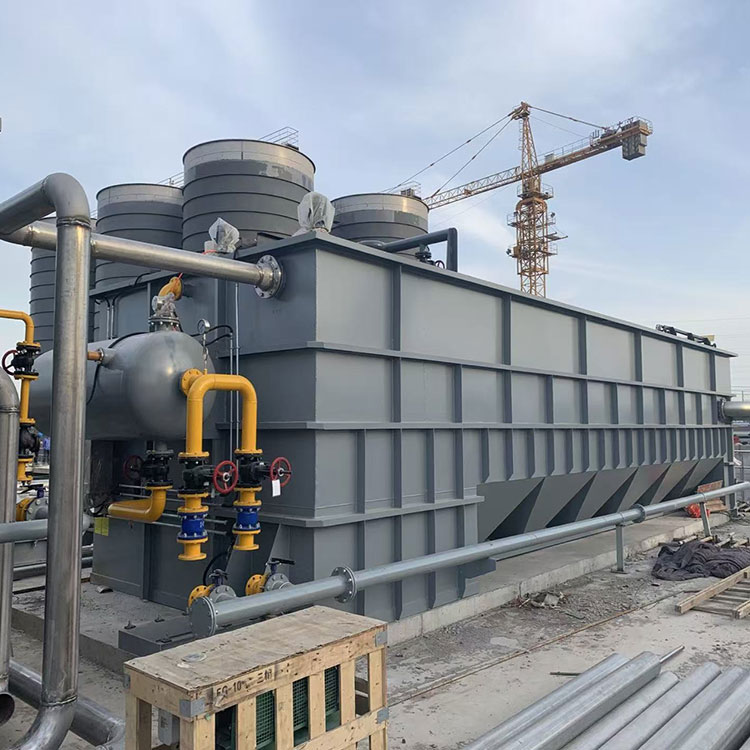
- Dissolved Air Flotation (DAF) System: For removing cotton fibers, suspended solids, and floating matter
- Ozone Generator:For deep decolorization and refractory organic pollutant control
- Ultrafiltration (UF)& Reverse Osmosis (RO) Systems: For advanced purification, desalination, and water reuse
- Chemical Dosing Skid: For automated dosing of coagulants, flocculants, pH-adjustment chemicals, and decolorizing agents
- Plate and Frame Filter Press: For sludge dewatering, volume reduction, and subsequent handling
More Cases

 Henan Public Network Security Registration No. 41077102000244