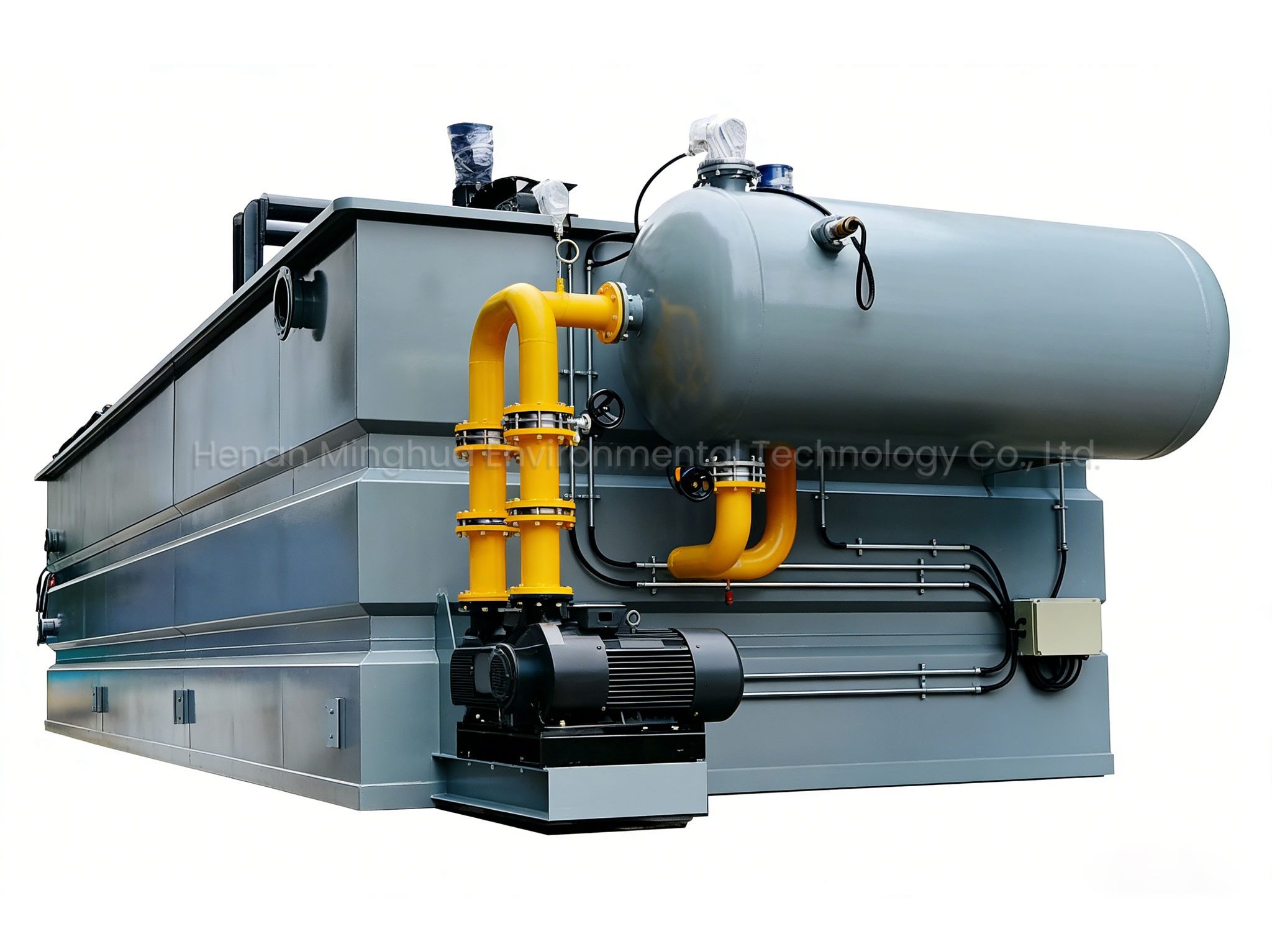
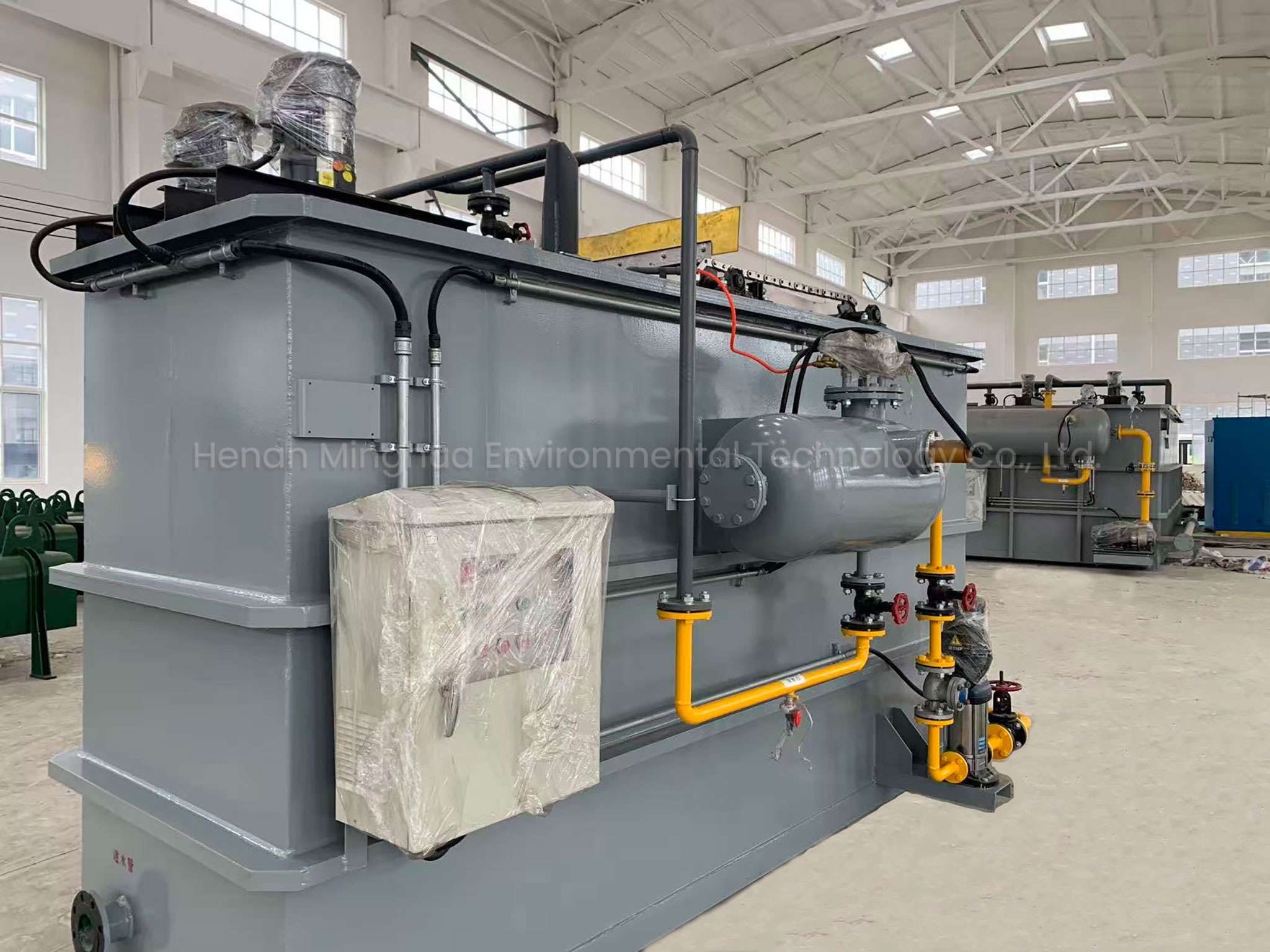
| Parameters | Contents |
|---|---|
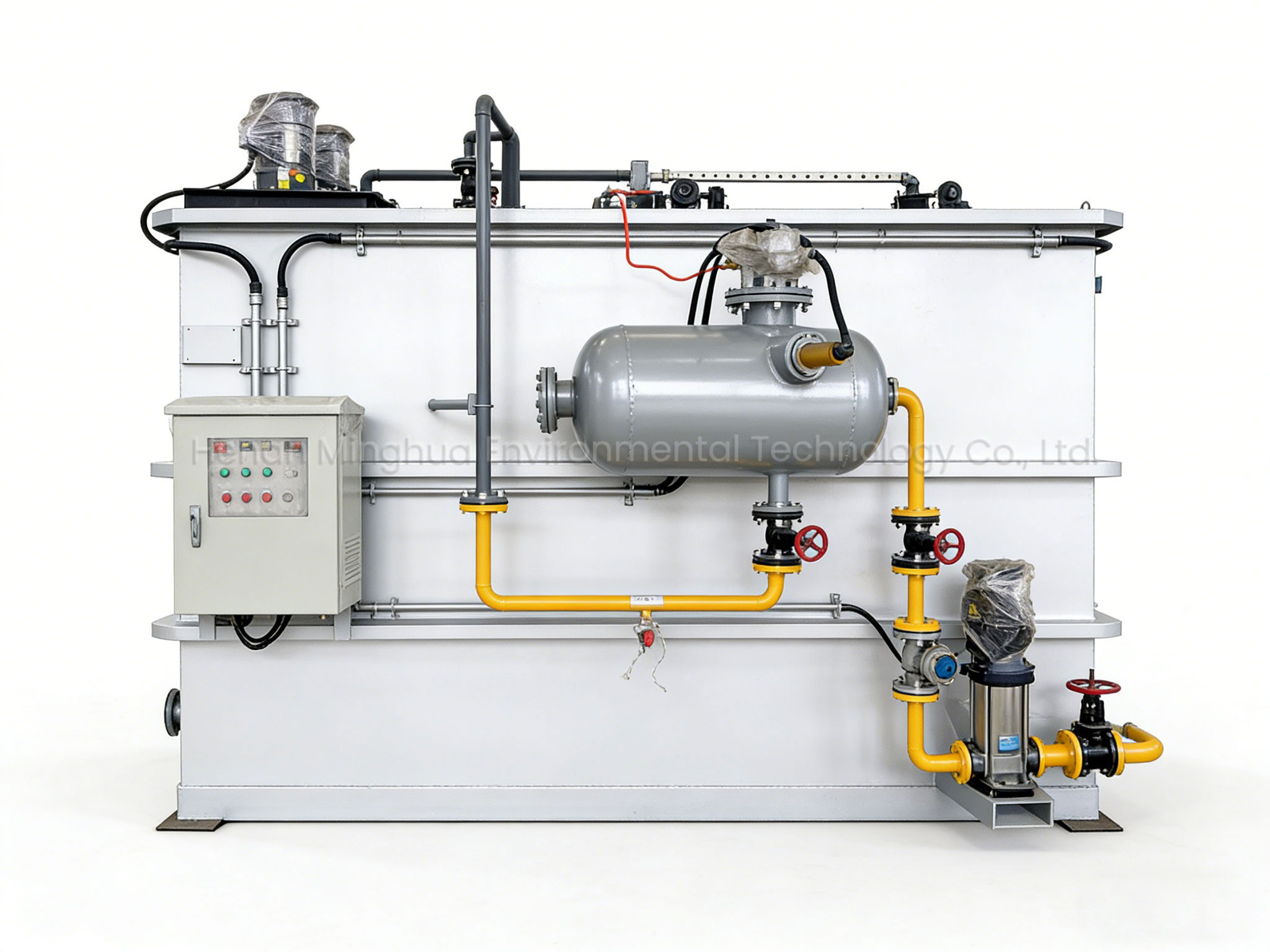
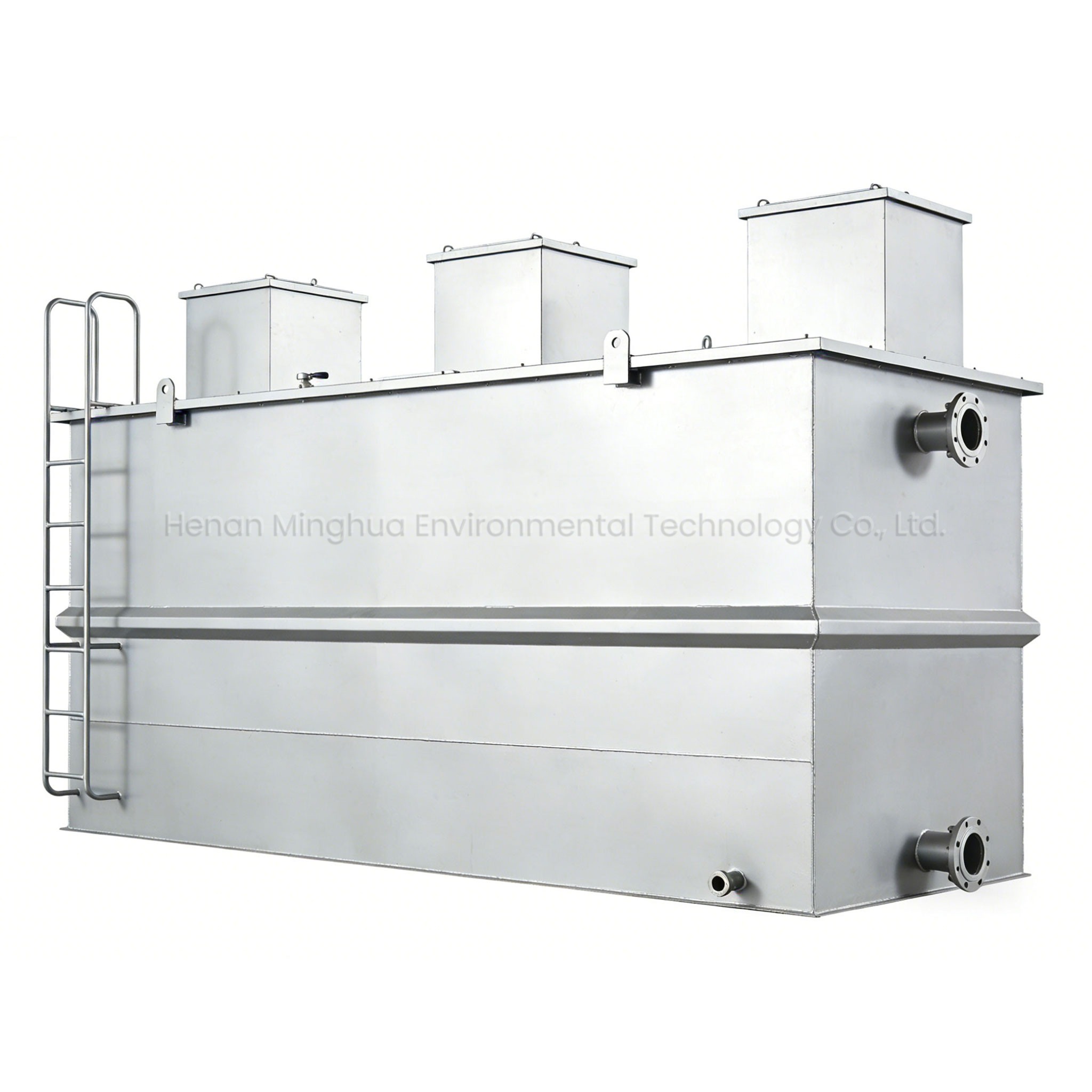
| Model / Specifications | MHQF-X (X = Processing volume m³/h) |
| Treatment Capacity | 5-100 m³/h |
| Effluent Water Quality | Capable of removing SS, oils, and a small amount of COD (20%-30%) |
| Material Options | Anti-corrosive Carbon Steel, Stainless Steel |
| Overall Dimensions | L: 1500-12000 mm W: 1000-4800 mm H: 1300-2500 mm |
| Core Treatment Technology | Dissolved air - Gas release - Adhesion - Skimming separation |
| Core Components & Configurations | Main motor, Air compressor, Skimmer, Mixer, Dissolved air tank, Automatic control cabinet, High-pressure pump |
| Operating Power | 2-28 kW |
| Operation Mode | Fully Auto PLC, Manual, Remote |
| Dissolved Air Pressure (MPa) | 0.4-0.8 MPa |
| Skimming Speed | Adjustable |
FAQ
Q1: What are the advantages of DAF over conventional sedimentation?
Conventional sedimentation struggles with light particles, oil, and grease while taking up significant space. DAF uses microbubbles for rapid solid-liquid separation, requiring only 1/3 the footprint of a clarifier while offering superior shock-load resistance and stable effluent quality for strict discharge standards.
Q2:Why is the effluent turbid or exceeding TSS limits?
This is typically caused by low saturation pressure, clogged release nozzles, unbalanced chemical dosing, or hydraulic overloading. Quick fix: Clean blocked nozzles, adjust dissolved air pressure, rebalance coagulant/flocculant dosage, and stabilize influent flow.
Q3: How to fix high sludge moisture or poor skimming?
High moisture and incomplete scum removal result from high tank water levels, fast scraper speeds, or chemical overdosing. Quick fix: Lower the operating water level, reduce scraper speed to let scum compact, and optimize chemical dosage for denser flocs.
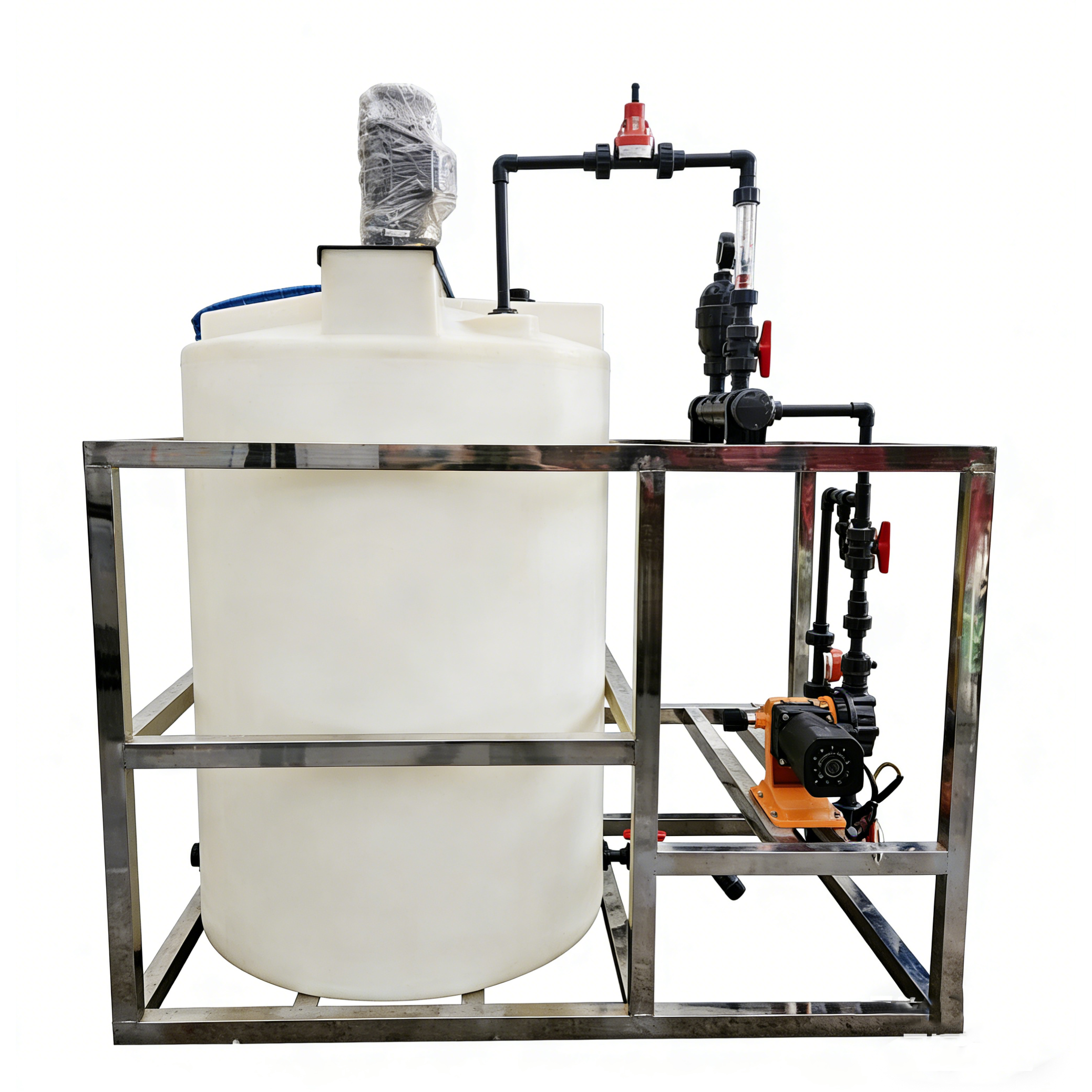
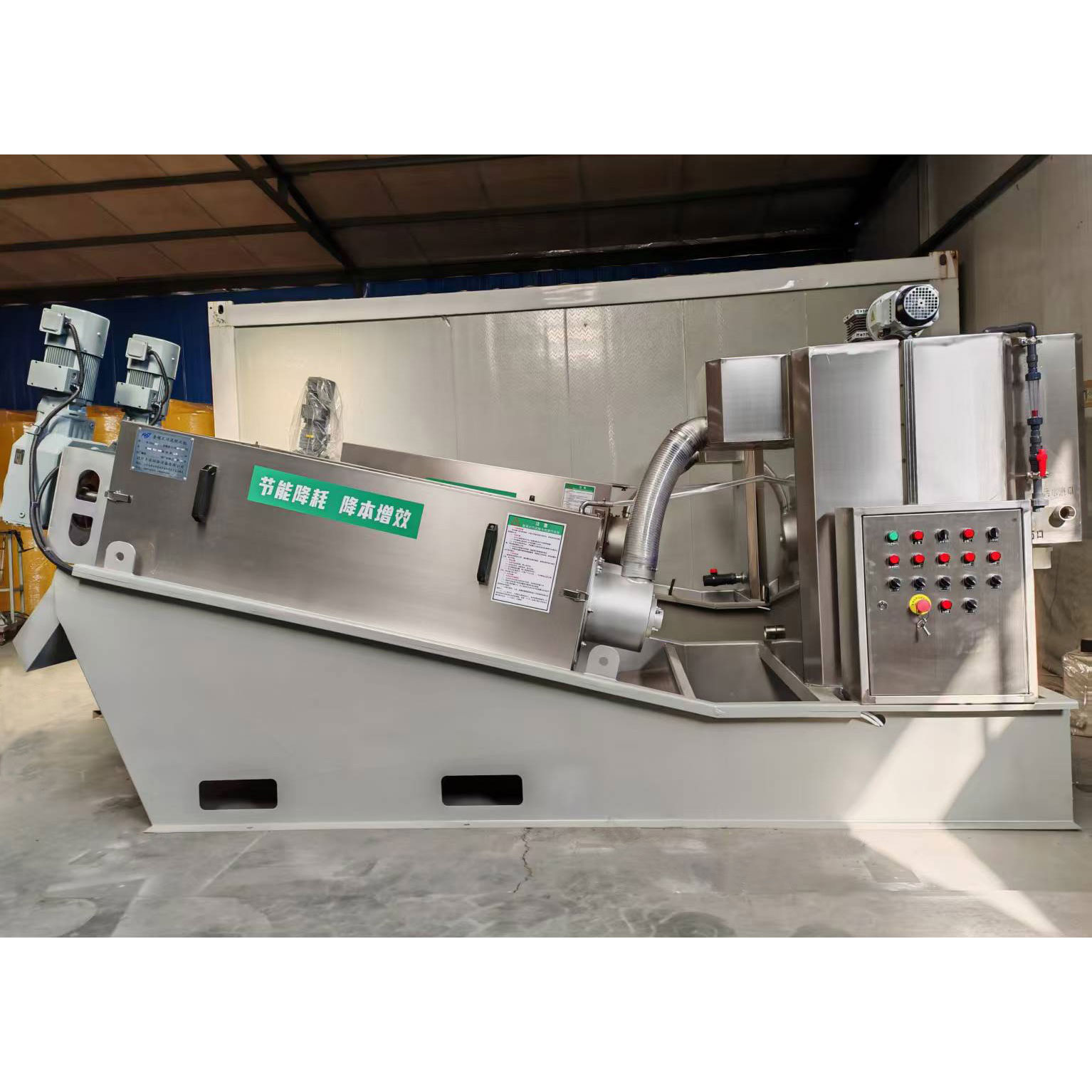

 Henan Public Network Security Registration No. 41077102000244