

60t/d Electroplating Facility: Segregated Wastewater Collection and Heavy-Metal ZLD Project
Project Overview
Background and Key Challenges
The customer is a newly established electroplating manufacturer. To meet stringent environmental impact assessment and compliance requirements for the surface-finishing industry, the facility established a green-manufacturing objective during the planning stage: full reuse of heavy-metal-bearing rinse water and zero liquid discharge of heavy-metal wastewater from the plant boundary.
The implementation of the project faces three major severe challenges:
Limited Available Space
The area allocated for wastewater treatment was highly constrained, while the ZLD process required multiple treatment stages, including precipitation, filtration, membrane treatment, evaporation, and sludge dewatering. A conventional layout would have been difficult to accommodate within the available site conditions.
Complex Segregation Requirements
The production lines include zinc plating, chromium passivation, and pre-treatment cleaning. If rinse water from different plating processes is mixed, chemical treatment performance may be affected, chemical consumption may increase, and membrane concentration and reuse may become more difficult to control.
Strict Heavy-Metal Discharge Controls
The environmental approval requirements for the new electroplating facility imposed strict controls on heavy-metal wastewater, including wastewater reuse, concentrate management, and discharge control.
Segregated Treatment Process and Core Equipment
Rather than treating all wastewater as a mixed stream, the project adopted a customized process based on clean-water segregation, wastewater classification, heavy-metal precipitation, membrane concentration and reuse, and concentrate volume reduction through evaporation.
Heavy-Metal Wastewater Treatment Line
For zinc-containing and passivation wastewater:
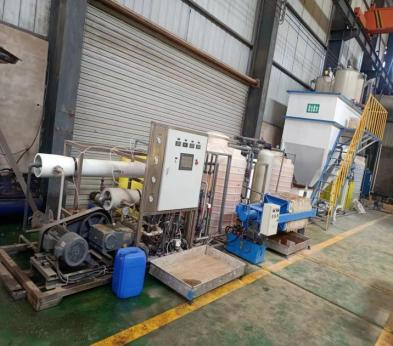
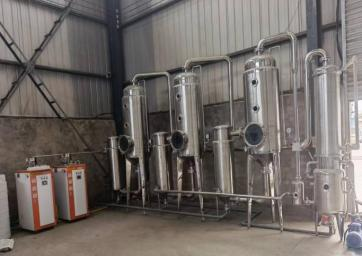
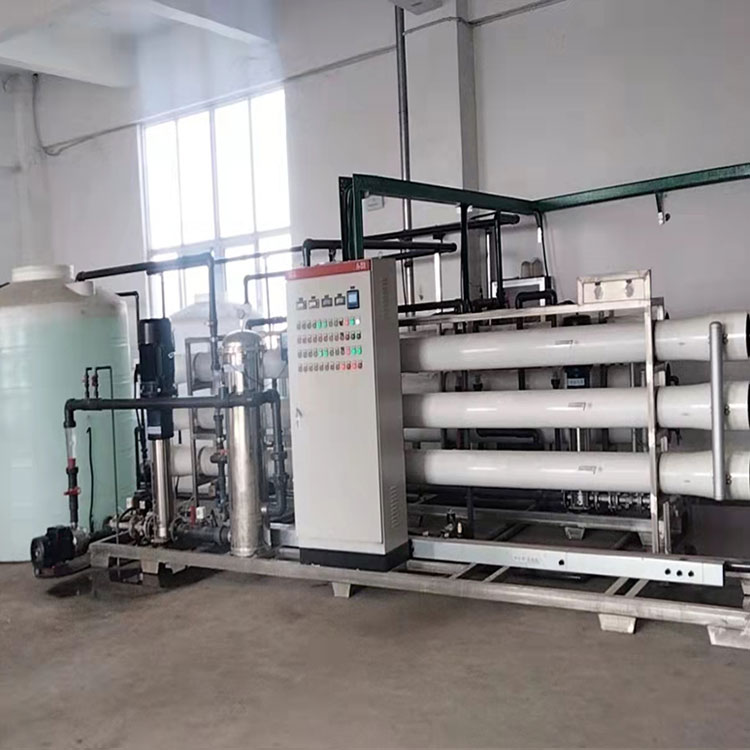
Smart chemical precipitation → Ultrafiltration (UF) → Reverse Osmosis (RO) → Multi-Effect Evaporation (MEE)
The system provides deep desalination and heavy-metal separation. Where treated water meets the relevant process-water requirements, it can be reused in suitable electroplating production applications.
Combined Wastewater Treatment Line
For wastewater containing organic pollutants and oil:
Oil Separation Tank → Dissolved Air Flotation (DAF) → Sedimentation → Combined Biological Treatment
This treatment line removes oil, suspended solids, and chemical flocs before biological treatment, helping reduce COD load and support compliant discharge.
Core Equipment Minghua Use
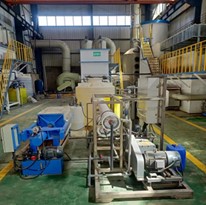
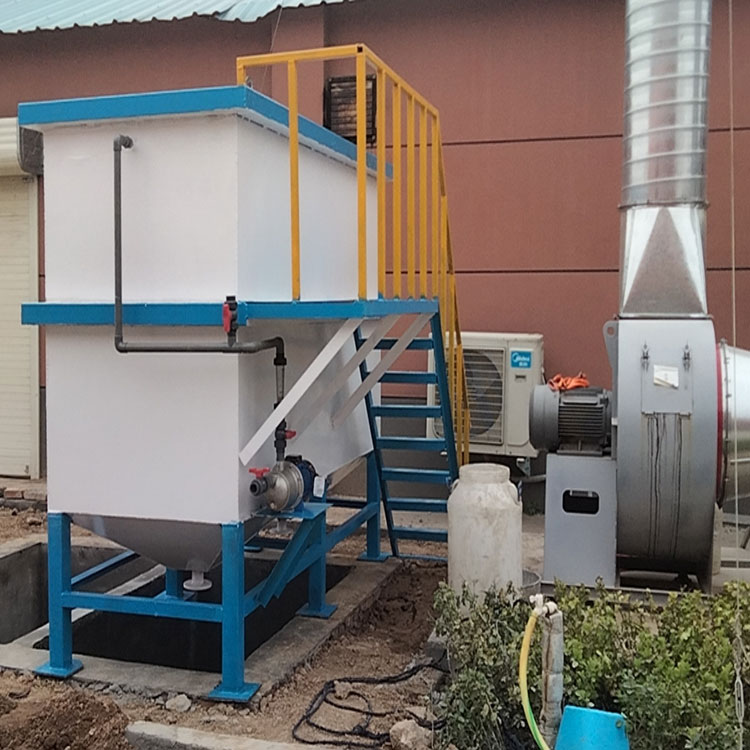
· Dissolved Air Flotation System
Operational Performance and Project Benefits
The system recovers approximately 36 t/d of reuse water that meets cleaning-line requirements. The project saves more than RMB 100,000 annually in freshwater procurement and wastewater discharge costs.
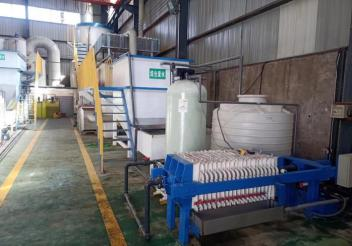
The complete treatment system was installed within an approximately 300 m² footprint, helping the customer avoid additional land expansion and civil-construction costs. PLC-based automation enables one operator to perform routine central-control monitoring and standard inspections, supporting compliant operation of the electroplating production line at full capacity.
| Parameters | Details |
| Types of Waste Water | Zinc-Containing Wastewater, Passivation Wastewater, and Combined Wastewater |
| Treatment Capacity | 20 m³/d Each |
| Technology | Zinc-containing Wastewater: Chemical Precipitation | Membrane Separation | Evaporation Passivation Wastewater: Chemical Precipitation | Membrane Separation | Evaporation Combined Wastewater: Oil Separation | DAF | Sedimentation | Biological Treatment |
| Discharge Standard | Electroplating Pollutants Electroplating Discharge Standard (GB 21900-2008) |
| Untreated/Inlet | COD≤500 mg/L, Total Zinc (Zn)≤200 mg/L, Total Chromium (Cr)≤80 mg/L, SS (Suspended Solids)≤500 mg/L |
| Treated/Outlet | Zero liquid discharge for heavy-metal-bearing wastewater; compliant discharge for combined wastewater. COD≤80mg/L、SS≤50mg/L |
FAQ
What happens if zinc-containing and chromium-containing rinse water are accidentally mixed?
The system includes online water-quality interlocks and an emergency bypass buffer tank at the front end. If sensors detect abnormal oxidation-reduction potential (ORP) or pH values—for example, when chromium-containing wastewater enters the zinc-containing treatment line—the inlet valve can automatically close and divert the wastewater to an emergency buffer tank while triggering an alarm.
This arrangement helps prevent abnormal wastewater from entering downstream membrane treatment units and reduces the risk of irreversible membrane damage.
Will multi-effect evaporation create excessive energy and operating costs for a 60 t/d electroplating facility?
The system does not send the full 60 t/d wastewater flow directly to evaporation. High-recovery RO is first used to convert approximately 85%–90% of heavy-metal-bearing wastewater into treated water for reuse.
As a result, the brine flow entering the multi-effect evaporator is reduced to approximately 4–6 t/d. This approach reduces the evaporation load and helps keep daily energy and consumables costs at a manageable level for small and medium-sized electroplating facilities.
How has the system maintained stable operation for 3.5 years with MEE treatment and one operator per shift?
System stability is supported by membrane pre-treatment and automated control. The ultrafiltration system removes colloids and suspended solids that may contribute to scaling or fouling, improving feedwater conditions for downstream treatment.
PLC-based automatic start-stop control and closed-loop chemical dosing reduce routine manual operation. Operators can monitor key instrument readings through the central control screen, while membrane cleaning, equipment maintenance, and other specialized tasks are performed according to the operating and maintenance plan.

 Henan Public Network Security Registration No. 41077102000244