

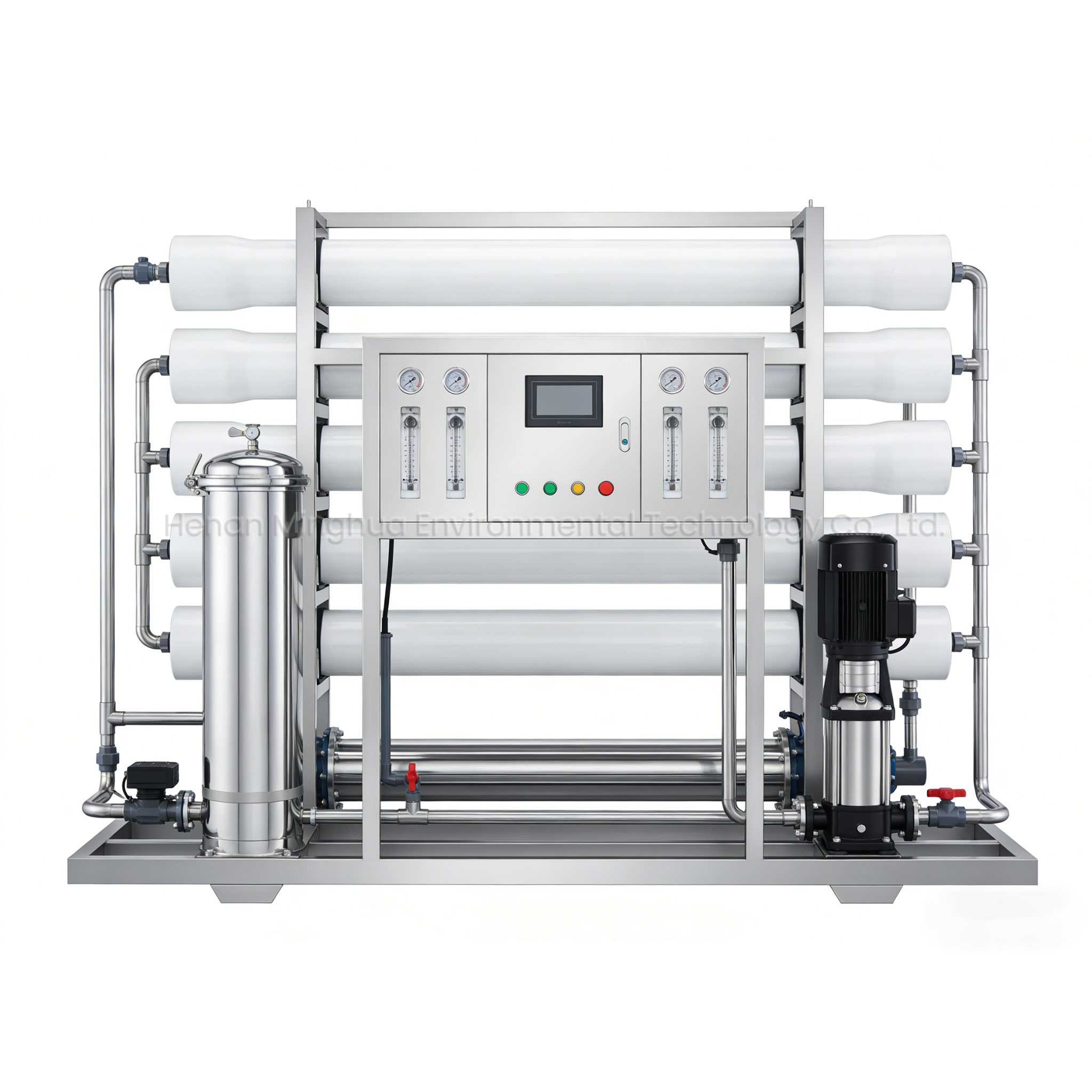
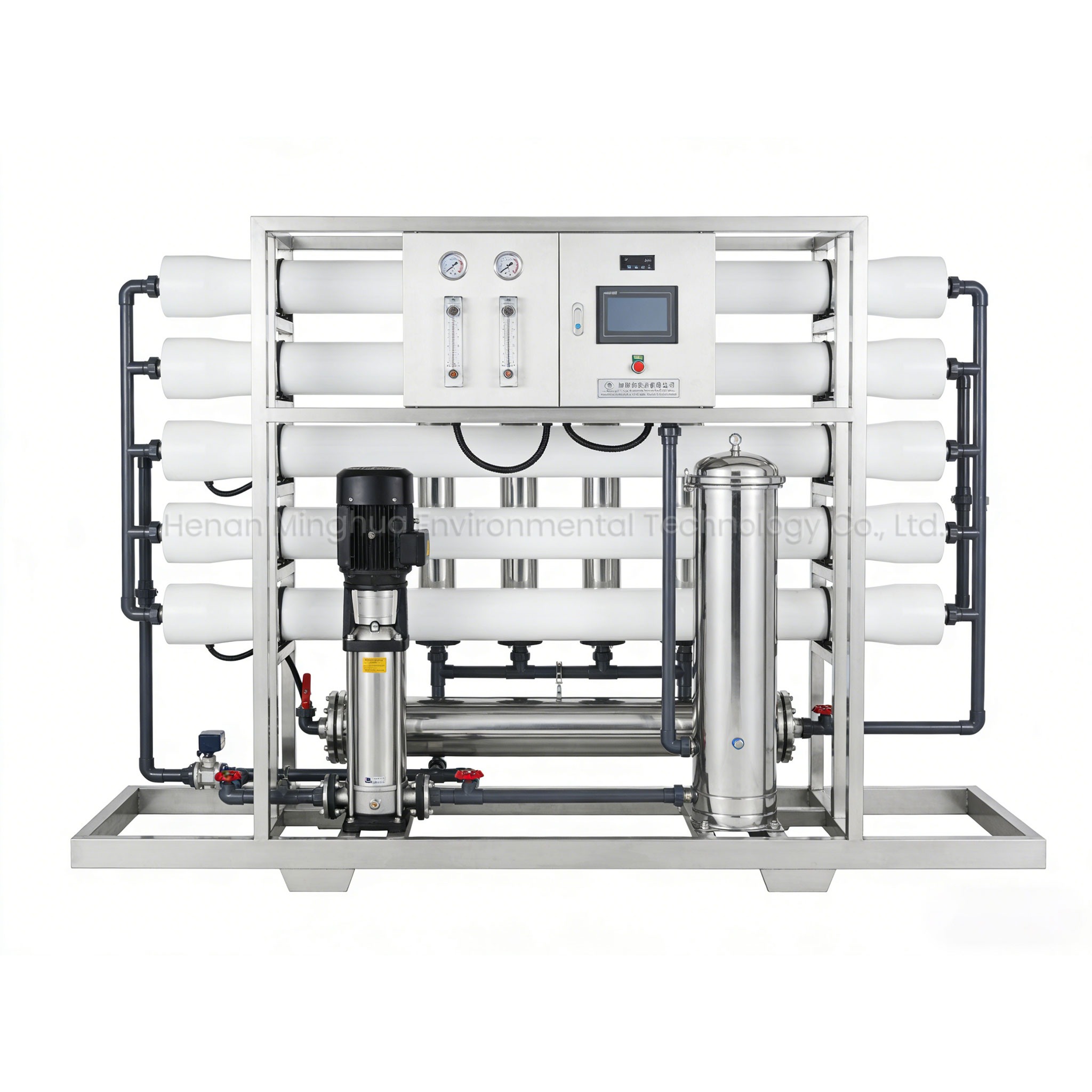
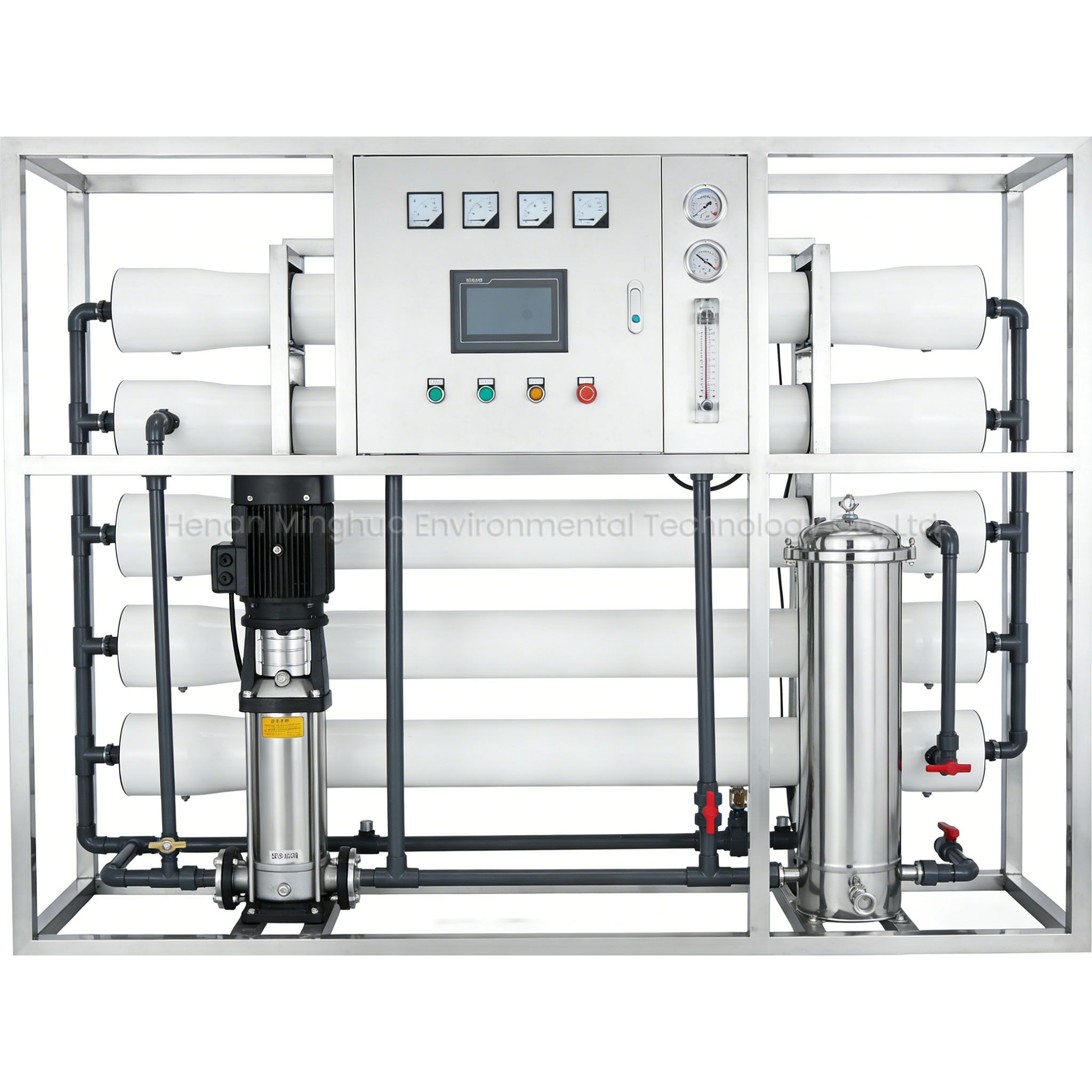
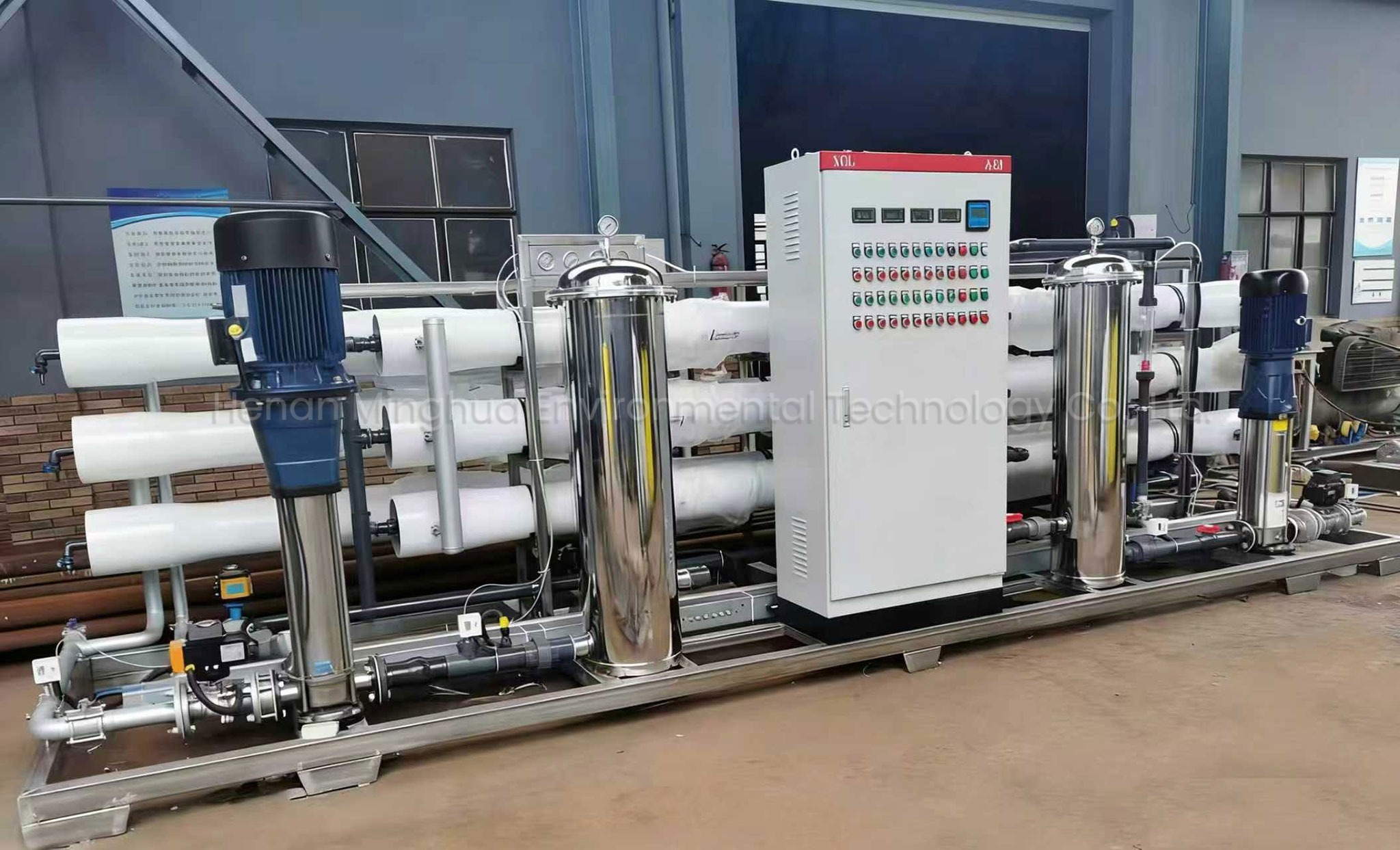
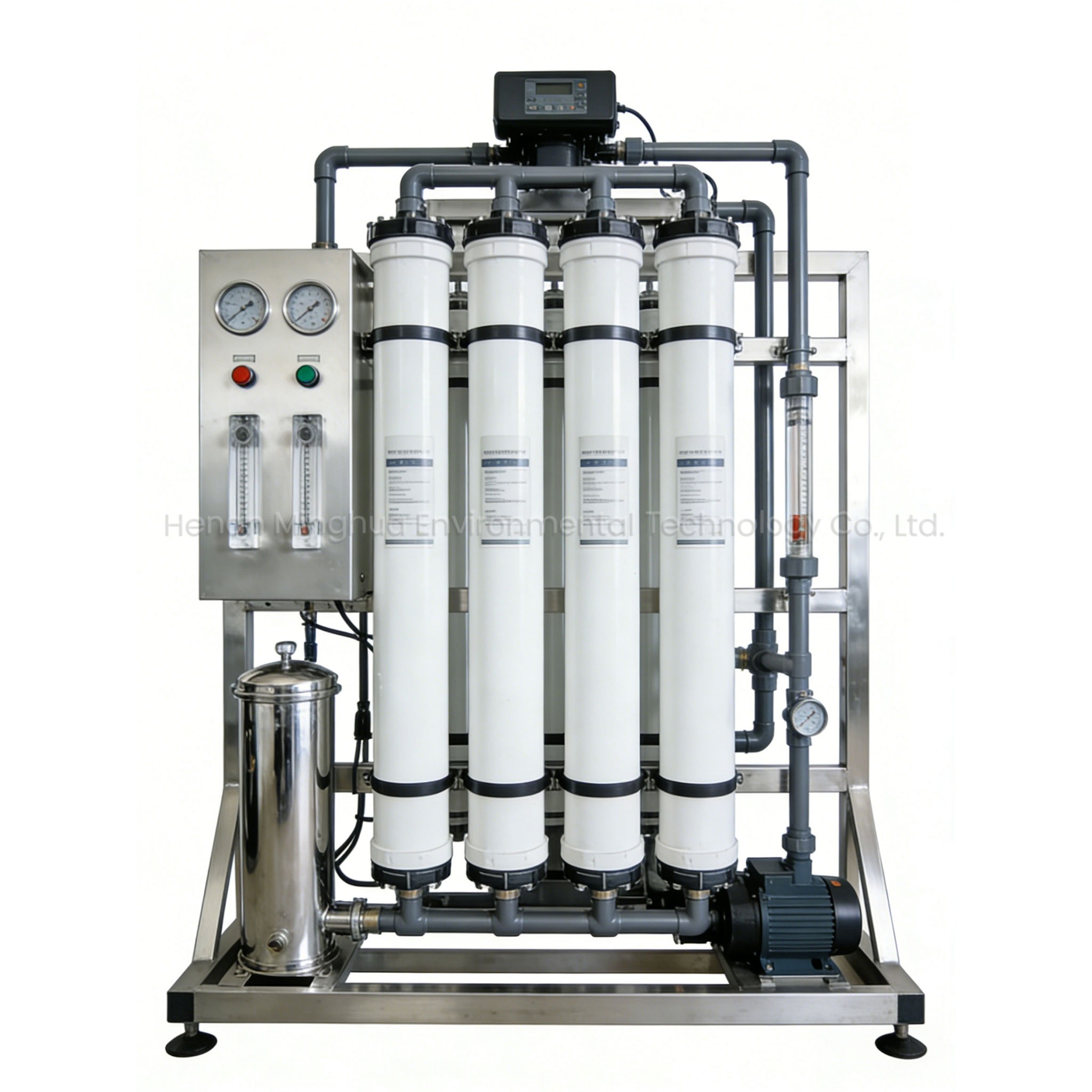
| Parameters | Contents |
|---|---|
| Model / Specifications | MHFST-X (X = Processing volume m³/h) |
| Treatment Capacity | 2-40 m³/h |
| Influent Water Quality | Influent COD ≤ 100 mg/L Conductivity ≤ 10,000 µS/cm |
| Effluent Water Quality | Effluent Conductivity ≤ 30 µS/cm |
| Material Options | RO Membrane - Aromatic Polyamide |
| Overall Dimensions | L: 1500-8000 mm W: 1000-1500 mm H: 1500-2000 mm |
| Core Treatment Technology | Filtration Method |
| Core Components & Configurations | RO membrane, High-pressure pump, Flow meter, Conductivity meter, Control cabinet, Backwash system |
| Operating Power | 4 KW - 50 KW |
| Installation Method | Above-ground |
| Operation Mode | Fully Auto PLC, Manual, Remote Monitoring |
| Backwash Cycle | 30-minute / 10-hour interval |
FAQ
Q1: Why is RO permeate conductivity increasing or water quality declining?
Elevated conductivity and reduced salt rejection are typically caused by membrane aging, damaged interconnector O-ring seals, upstream pretreatment failure, or raw water quality fluctuations. Quick fix: Inspect pressure vessel seals, verify pretreatment performance, run a Clean-In-Place (CIP) cycle, or replace degraded RO membrane elements.
Q2: What causes unstable pump pressure and reduced permeate flow?
Pressure drops and declining permeate production usually stem from clogged security cartridge filters, mineral membrane scaling, or insufficient pump inlet pressure. Quick fix: Replace clogged 5-micron cartridge filters, perform targeted chemical CIP to remove scale, and calibrate high-pressure pump operating parameters.
Q3: What is the typical service life of an RO membrane?
Under standard operating conditions, industrial RO membranes typically last 2 to 3 years. With effective pretreatment (such as UF or multimedia filtration) and routine CIP cleaning, the service life can be extended to 3 to 5 years.

 Henan Public Network Security Registration No. 41077102000244