


150 t/d Automotive Parts Electroplating Wastewater Treatment Project: Chromium-Containing Wastewater ZLD
Project Overview
Background and Key Challenges
The customer is a specialized manufacturer of automotive filter end caps. As production capacity expanded and local environmental controls on priority heavy metals became more stringent, the customer adopted an environmental strategy based on wastewater segregation, priority heavy-metal control, compliant discharge, and zero-liquid-discharge management.
The implementation of the project faces three major technical challenges:
Multiple Wastewater Streams and Different Discharge Requirements
The facility generates chromium-containing passivation wastewater, acidic and alkaline zinc-plating rinse water, and combined workshop washdown wastewater. Mixing these streams can substantially increase the chemical demand for hexavalent chromium reduction and increase the risk of heavy-metal exceedances in discharged wastewater.
Hexavalent Chromium and Membrane Scaling Risks
Chromium passivation rinse water contains elevated chromium concentrations and has strong oxidizing properties. Without appropriate pre-treatment, direct RO concentration may increase the risk of membrane oxidation, metal scaling, and reduced membrane performance.
Long-Term Operational Stability
Automotive supply-chain operations require reliable production schedules. The wastewater treatment system must be designed to manage fluctuating loads and support stable long-term operation.
Segregated Treatment Process and Core Equipment
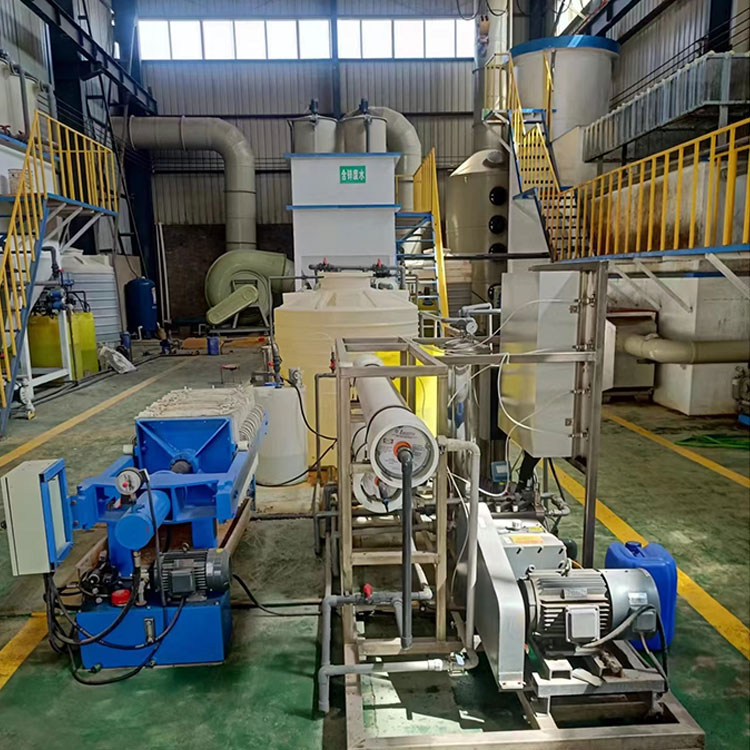
Based on wastewater characteristics and discharge requirements, the system uses a combined process based on source segregation, targeted treatment, and concentration-based resource management.
Chromium-Containing Wastewater Stream
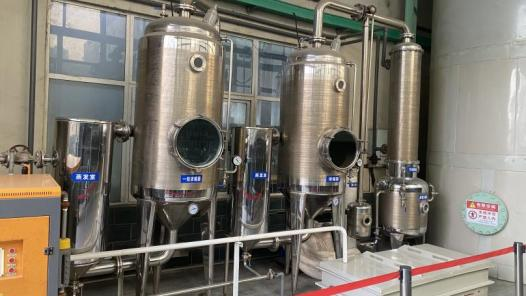
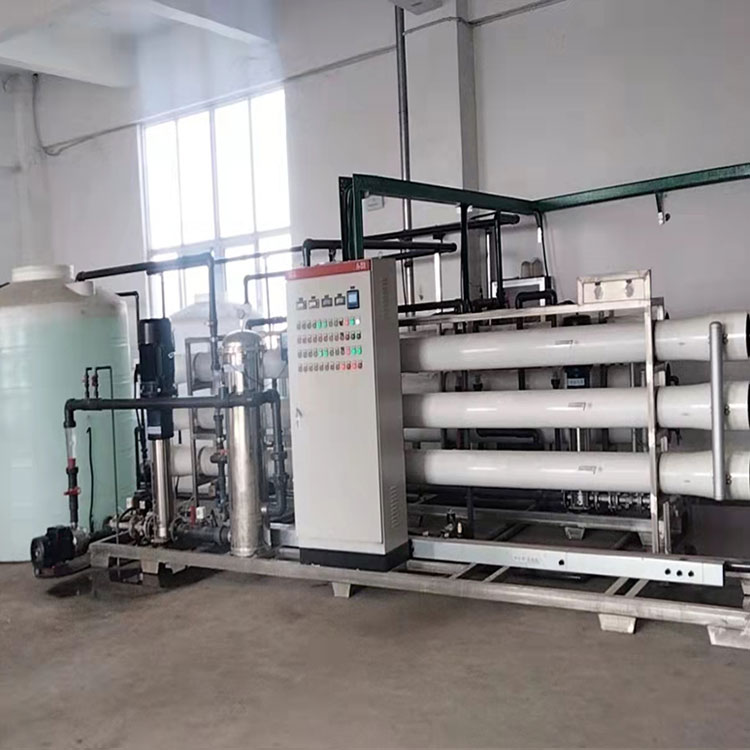
Chromium-containing rinse water → Reduction / Chemical Precipitation → Ultrafiltration (UF) → Reverse Osmosis (RO) Concentration → Multi-Effect Evaporation (MEE) and Crystallization.
RO permeate is reused in suitable cleaning applications. Chromium-rich RO concentrate is further treated through evaporation and crystallization, with the resulting solid residue transferred to qualified hazardous-waste treatment facilities.
Zinc-Containing Wastewater Stream
Zinc-containing wastewater → Chemical Precipitation → Ion Exchange (IX) Polishing.
The process is designed to maintain total zinc at or below 1.5 mg/L, subject to wastewater conditions and applicable discharge requirements.
Combined Wastewater Stream
Workshop washdown wastewater → Dissolved Air Flotation (DAF) → Membrane Bioreactor (MBR).
DAF removes floating oil and suspended solids before biological treatment. The MBR system further reduces COD load and retains suspended solids to support compliant discharge.
Core Equipment Minghua Use
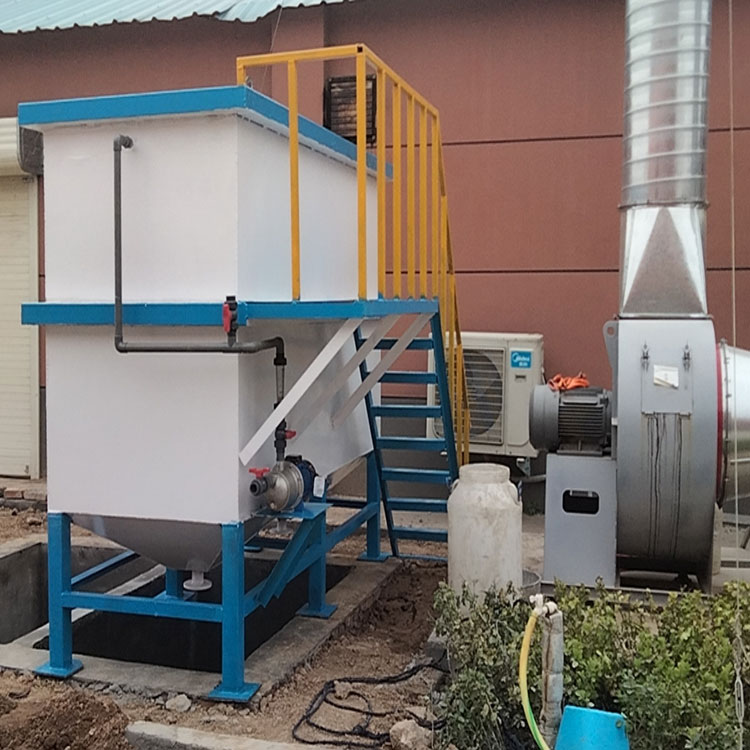
· Dissolved Air Flotation System
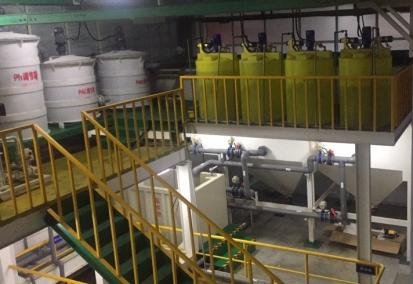
· Automatic Chemical Dosing System
Operational Results and Project Benefits
The project has operated for more than 10 years, with membrane cleaning, equipment maintenance, and operating monitoring performed according to the established maintenance plan.
Chromium-containing wastewater is managed through closed-loop reuse and evaporation-based solidification. This treatment approach helps reduce the risk of chromium-related discharge fluctuations and supports continuous production at the facility.
Through membrane concentration and evaporation, the volume of chromium-containing wastewater requiring off-site hazardous-waste handling has been reduced by more than 90%. The project has also reduced annual hazardous-waste disposal expenditure by tens of thousands of RMB.
Automatic chemical dosing and online monitoring allow one operator per shift to complete routine central-control monitoring and standard inspections. Specialized maintenance is performed in accordance with the system maintenance plan.
Key Influent and Effluent Parameters
| Parameters | Details |
| Types of Waste Water | Integrated Electroplating Wastewater |
| Treatment Capacity | 150 m³/d |
| Technology | Physicochemical | Biological (MBR) |
| Discharge Standard | Electroplating Pollutants Electroplating Discharge Standard (GB 21900-2008) |
| Untreated/Inlet | COD≤500 mg/L, Total Zinc (Zn)≤200 mg/L, SS (Suspended Solids)≤500 mg/L, Total Chromium (Cr)≤80 mg/L |
| Treated/Outlet | Zero liquid discharge for chromium-containing wastewater; compliant discharge for zinc-containing wastewater and combined wastewater. COD≤80mg/L、Total Zinc (Zn)≤1.5mg/L |
FAQ
Q1: Will RO membranes become easily fouled or scaled when treating chromium-containing wastewater using membrane concentration and evaporation?
The RO system is protected by three pre-treatment stages: targeted chemical decomplexation and precipitation, ultrafiltration (UF), and micron-level cartridge filtration. These units reduce colloids, suspended solids, and free heavy-metal ions before RO treatment.
The RO feedwater silt density index (SDI) is maintained below 3. Automatic antiscalant dosing and scheduled low-pressure clean-water flushing help control inorganic scaling and support a membrane operating life of more than two years under project operating conditions.
Q2: Does a 150 t/d system with three different treatment lines require complex daily operation?
The system uses modular treatment zones and centralized PLC control. Process steps—including pH adjustment, ORP oxidation-reduction control, membrane start-stop sequences, evaporator feed control, and sludge dewatering—are managed through predefined operating logic and online instrument interlocks.
Routine central-control monitoring and standard inspections can be completed by one operator per shift. Specialized maintenance is performed according to the operating and maintenance plan.
Q3: Why is ion exchange required after chemical precipitation for zinc-containing wastewater?
Chemical precipitation can remove the primary zinc load. However, when production schedules change or influent zinc concentrations fluctuate significantly, chemical treatment alone may not consistently maintain total zinc below stringent discharge targets such as 1.5 mg/L.
Ion exchange serves as a polishing treatment stage after precipitation, further reducing residual zinc ions and improving total-zinc control stability under fluctuating operating conditions.

 Henan Public Network Security Registration No. 41077102000244