


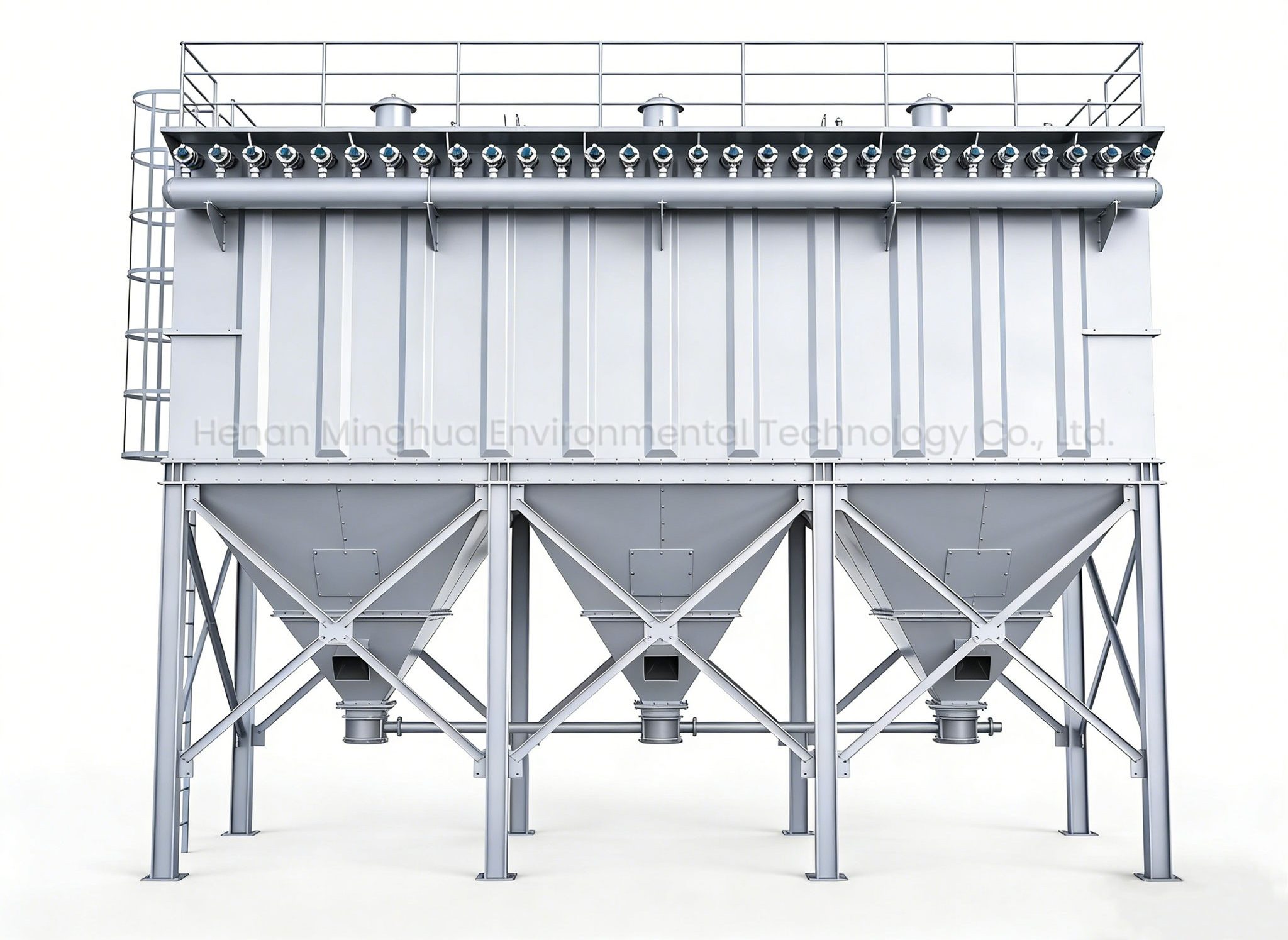
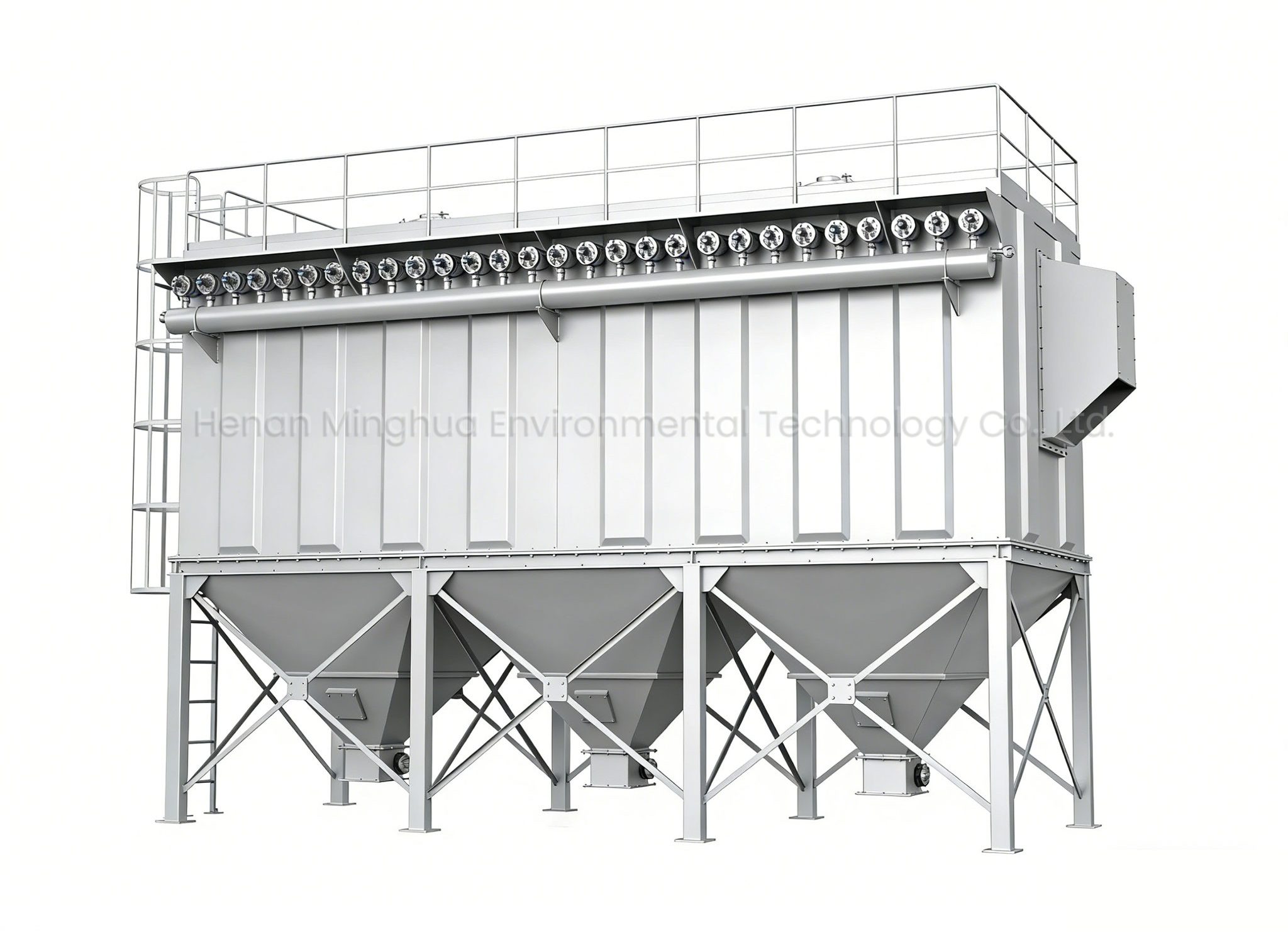
| Parameters | Contents |
|---|---|
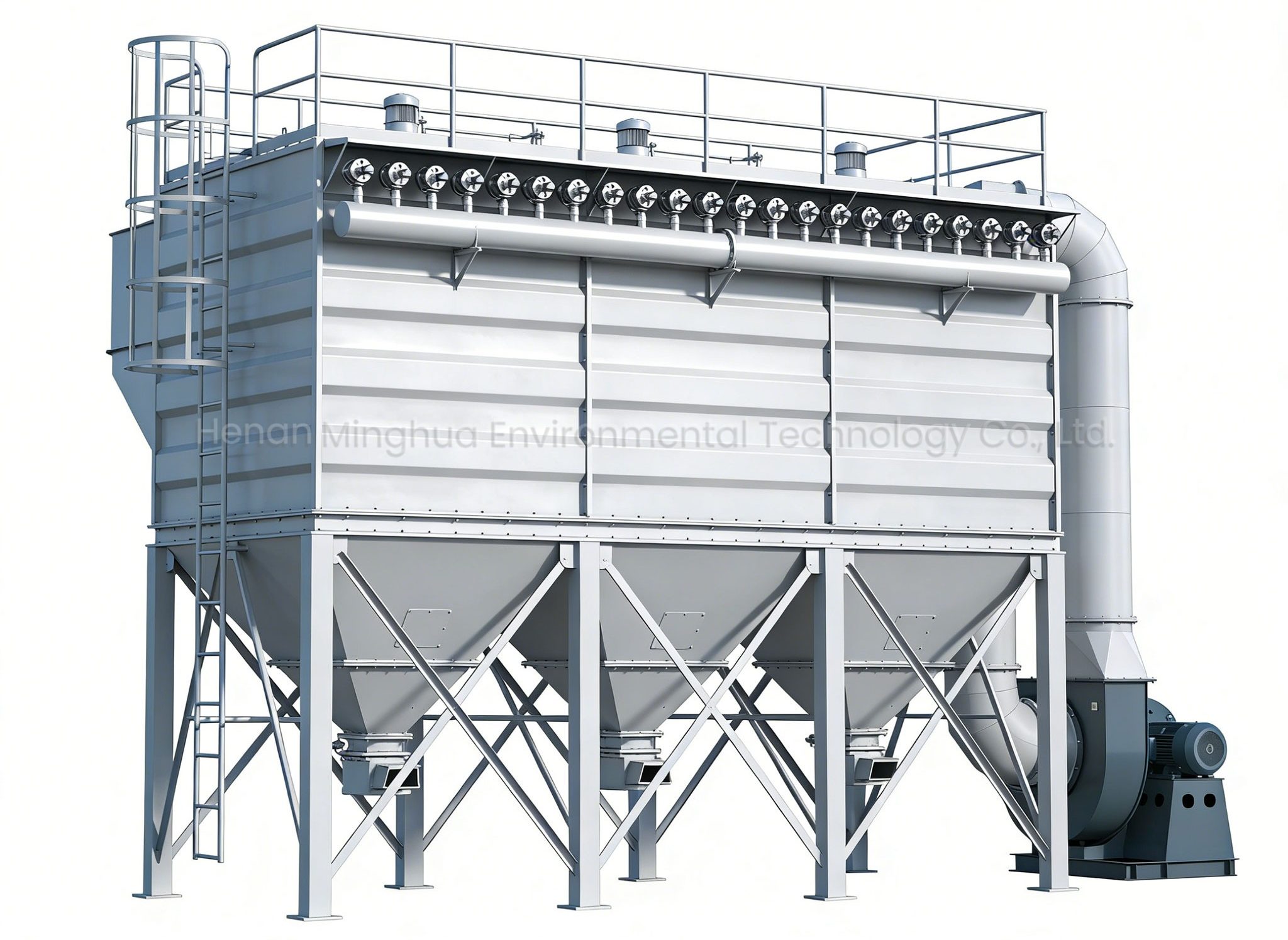
| Model / Specifications | MHLDM-X(Where X denotes Airflow Capacity in m³/h) |
| Airflow Capacity | 1000–200000 m³/h |
| Dust inlet concentration | ≤2000 mg/m³ |
| Efficiency | ≥98% |
| Applicable Exhaust Gas Types | Dust |
| Main Material | Carbon Steel / Stainless Steel |
| Control System | PLC Automated Pulse Jet Cleaning |
| Filtration Area | Tailored to Specific Models |
| Filter Bag Material | Polyester (PE), Acrylic, PPS, PTFE (Available in High-Temperature and Corrosion-Resistant grades) |
| Cleaning Pressure | 0.4–0.8 MPa |
FAQ
Q1: What is the difference between online and offline pulse-jet cleaning?
Online cleaning pulses filter bags during continuous airflow, ideal for non-stop industrial operations. Offline cleaning isolates individual compartments during pulse cleaning to prevent dust re-entrainment, delivering superior cleaning efficiency for high-dust load applications.
Q2: Why is dust collector efficiency low or the exhaust stack smoking?
Dust emissions and black smoke typically stem from torn filter bags, loose venturi seal collars, low compressed air pulse pressure, or caked bags. Quick fix: Replace damaged filter bags, secure tube sheet clamps, and inspect pulse valves to ensure adequate cleaning pressure.
Q3: What is the typical service life of fabric filter bags?
Under standard ambient conditions, filter bags typically last 1 to 2 years. Depending on gas temperature and chemical corrosiveness, we provide custom-selected high-temperature (PTFE, Nomex, PPS, fiberglass) and acid/alkali-resistant filter media to extend operational lifespan.


Henan Public Network Security Registration No. 41077102000244